My practice begins with recurring questions about how human beings construct themselves and exist within conditions they cannot fully control. Identity, consciousness, social structures, time and impermanence recur across my work, not as separate subjects but as intersecting forces. I am interested in moments when the self becomes unstable: when a role begins to replace the person performing it, when perception no longer guarantees certainty, or when what we attempt to preserve is already changing.
Painting remains at the core of my practice, but the idea determines the form it eventually takes. Moving image, photography and writing allow an inquiry to continue when the boundaries of a single medium become insufficient. Across them, I return to fragmentation, chiaroscuro, repetition, materiality and incomplete forms as ways of questioning what can be known, retained or made coherent.
Existential philosophy informs the work less as a theory to illustrate than as a position from which to examine experience. The absence of inherent meaning does not make existence empty. It shifts attention towards what is constructed through choice, attachment, creation, resistance and attention. Increasingly, I am interested in the human impulse to preserve, remember, repair and create despite the certainty of change.
My work does not seek resolution. It creates situations in which identity, freedom, value and certainty remain under pressure long enough to be examined.
Biography
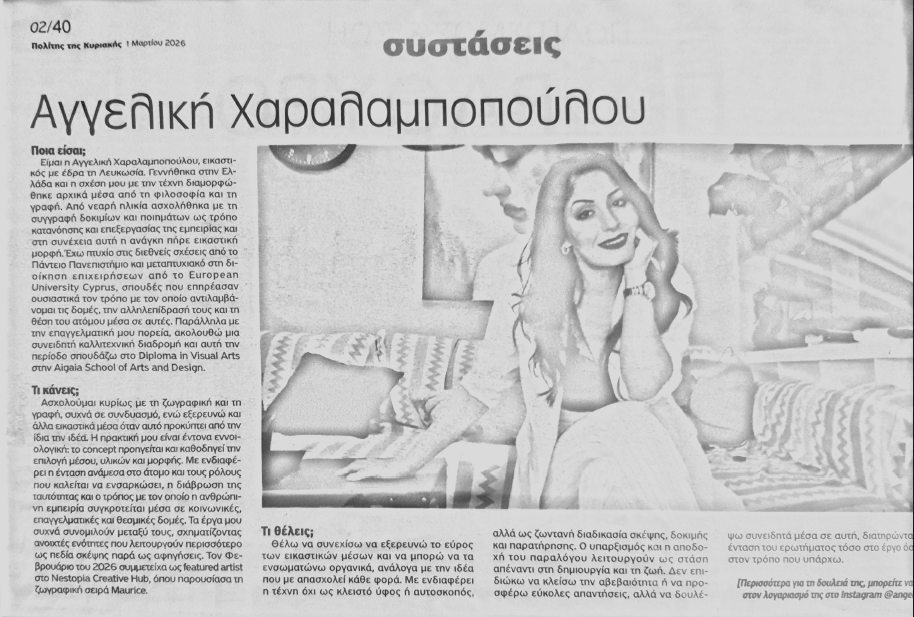
Angeliki Charalampopoulou is a multidisciplinary contemporary artist based in Nicosia, Cyprus. Born in Greece, she approaches art as a form of inquiry, with painting at the centre of a practice that extends into moving image, photography, writing and mixed media when the development of an idea requires it.
Her engagement with art began through essay writing and poetry, closely connected to philosophy. Language continues to operate alongside the visual within her practice: at times initiating a work, at others extending questions that remain unresolved within the image.
Her work moves through recurring concerns around identity, consciousness, social structures, autonomy, impermanence and the construction of value. Rather than treating these as fixed themes, she approaches them as interconnected conditions through which the human subject is continuously formed, challenged and transformed.
She holds a Bachelor’s degree in International Relations and a Master’s degree in Business Administration, which shaped her understanding of structures and their interrelations—from small organizations to large systems such as states and corporations—and the position of the individual within them.
Influenced early on by her mother’s practice with natural and discarded materials, and with music occupying a central role in her daily life, her work remains open and evolving. She began working systematically with painting in 2021, enrolled at the Aigaia School of Art in 2022, and since late 2024 has been pursuing a Diploma in Visual Arts. Her practice continues to develop across disciplines while retaining painting as its primary visual language.
My work returns to the human subject not as something fixed, but as something continuously negotiated. Identity is formed through memory, perception, relationships, roles and the structures within which we operate. What interests me is not simply the instability of the self, but what happens when that instability becomes visible.
Across different bodies of work, the individual may appear fragmented, concealed, repeated, absorbed into a system or caught at the threshold of transformation. Absence and incompleteness remain important, but increasingly as part of a wider inquiry into consciousness, autonomy and our response to conditions we cannot fully control.
The work often begins where certainty becomes difficult to sustain.
Read more…
Identity & Perception →
Identity appears as something constructed, performed and continuously revised. Masks, fragmented bodies, mirrors, omissions, altered faces and unstable narratives question the distinction between what we are, what we perceive ourselves to be and what is reflected back to us by others.
Systems & Autonomy →
Social, professional, economic and technological systems organise human life while simultaneously shaping the individuals operating within them. I am interested in the threshold where a useful structure becomes an identity, where participation becomes conformity, and where the human being risks becoming function, consumer, image, data or product. The question is not simply whether systems constrain us, but how autonomy survives within them.
Impermanence & Resistance →
Time alters bodies, objects, memories and structures regardless of our attempts to stabilise them. Yet human beings continually preserve, repair, archive, remember, restore and create. I am increasingly interested in this resistance to impermanence — not necessarily as an attempt to defeat change, but as an act through which value may itself be produced.
Absurdity & Constructed Value →
The absence of inherent or predetermined meaning does not necessarily lead to nihilism. It exposes freedom, finitude and responsibility. My work approaches the absurd as the condition within which we continue to choose, attach, construct, create and assign value despite knowing that permanence and certainty remain unavailable.
Artistic Approach
Painting at the Core, the Idea Beyond the Medium
Painting remains the central language of my practice.
I work predominantly through semi-abstract figuration, allowing the human figure to move between visibility and dissolution. Chiaroscuro, layered surfaces, impasto, gesture and incomplete forms create images in which the body can remain recognisable without becoming fully stable.
Light functions less as illumination than as selection. It reveals certain information while withholding the rest. Shadow therefore does not merely conceal; it creates uncertainty, allowing the image to remain open to projection, memory and psychological interpretation.
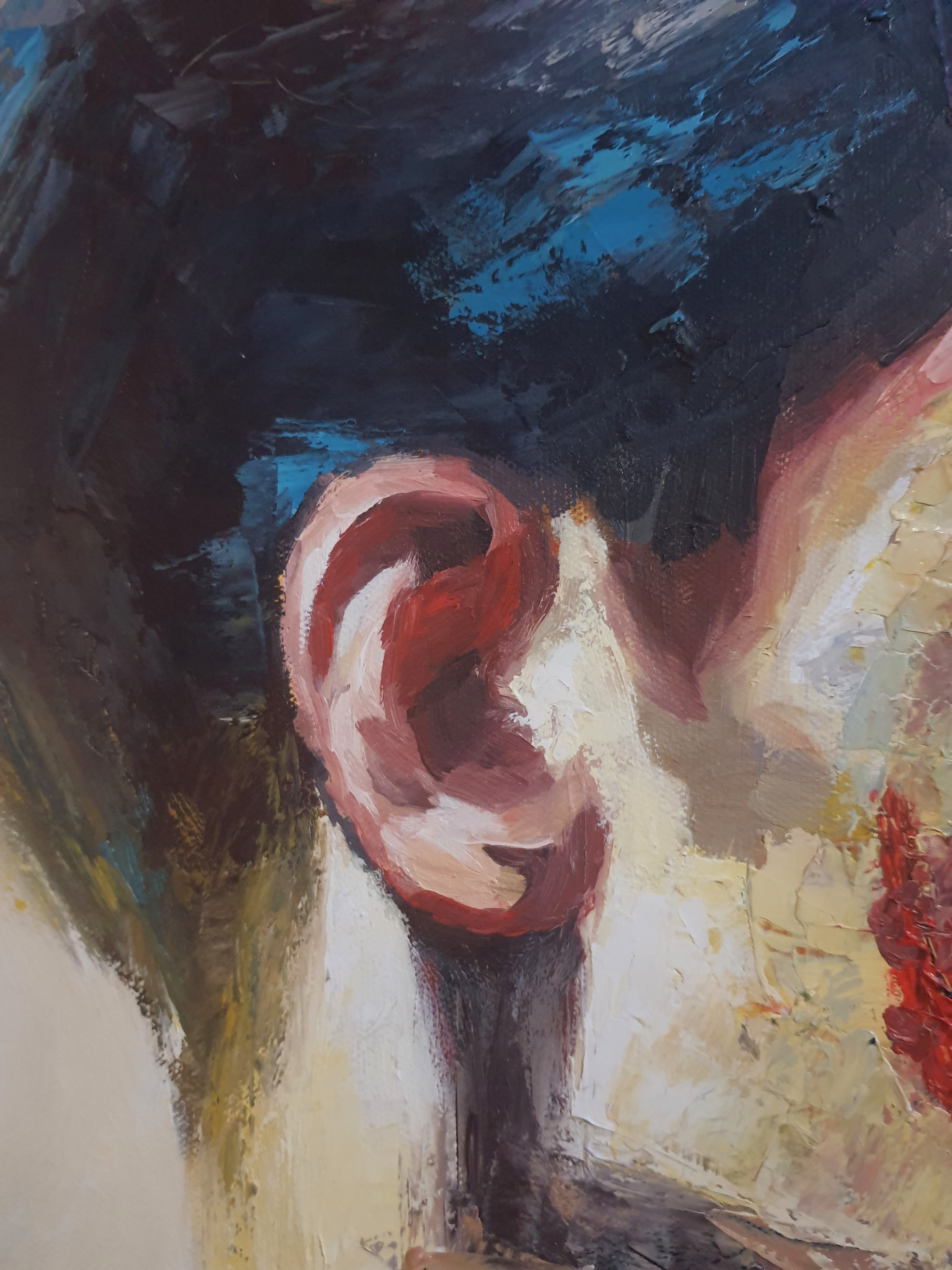
Materiality is equally important. Texture interrupts the passive surface of representation. Scraping, layering, exposed ground and accumulated marks retain evidence of formation and alteration, allowing the physical construction of the work to become part of its meaning.
At the same time, I do not consider medium a boundary.
Read more…
When an idea depends on duration, repetition or unstable sequences, it may move into moving image. When framing and omission become central, it may develop through photography. When an image cannot contain the full movement of a thought, language may continue it.
These forms do not function as separate practices. They are different ways of approaching the same unresolved questions.
Influences
An Ongoing Dialogue
My practice develops through an ongoing dialogue between visual art, philosophy, literature and cinema rather than through a single artistic lineage.
Existential thought — particularly Camus and Sartre — remains important to my understanding of freedom, absurdity and responsibility, while questions of constructed reality and systems extend into wider philosophical and cultural theory.
In cinema and literature, I am drawn to work that destabilises ordinary reality rather than simply escaping it: the psychological ambiguity of David Lynch, the interior intensity of Ingmar Bergman, and the absurd and institutional unease present in Beckett and Kafka.
Within painting, recurring points of reference include Francis Bacon, Marlene Dumas, Jenny Saville, Gerhard Richter, Lucian Freud and Egon Schiele, particularly in their different approaches to the body, psychological presence, distortion, materiality and perceptual uncertainty.
These references do not form a fixed genealogy. They function as points of friction within a practice that continues to change as its questions change.
Stop-motion moving image, Project 2025-26 – Aigaia School of Art and Design
Project Description
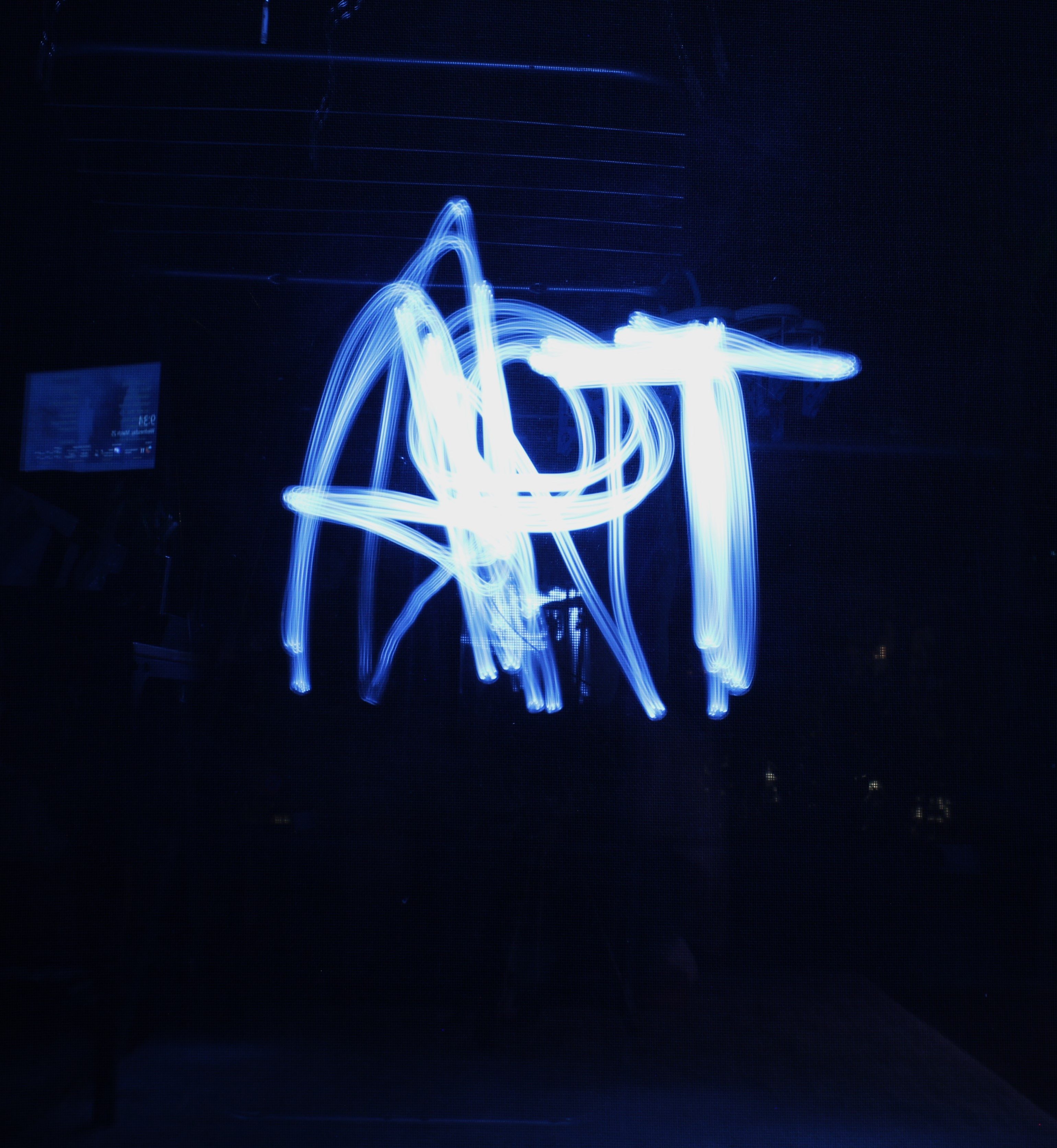
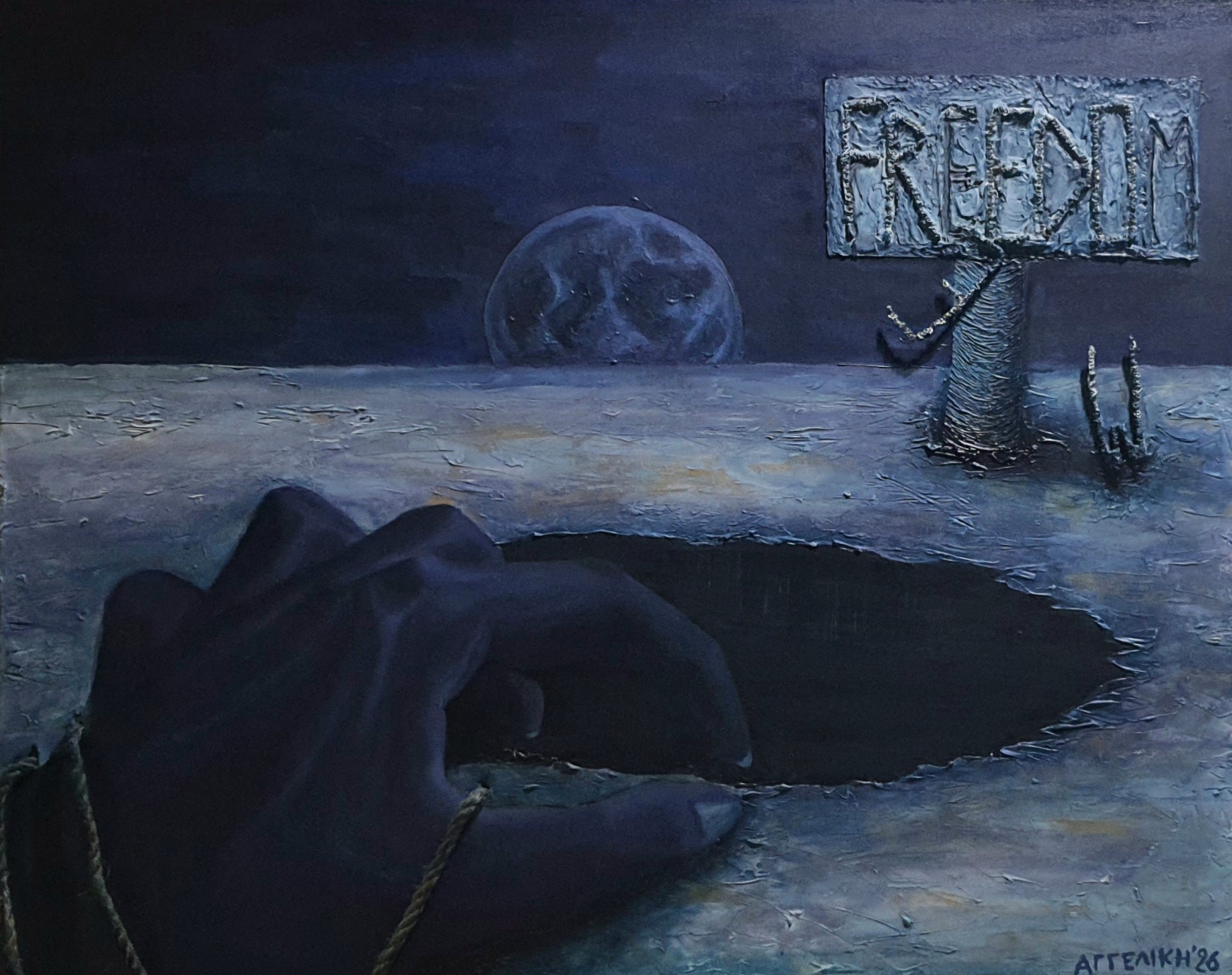
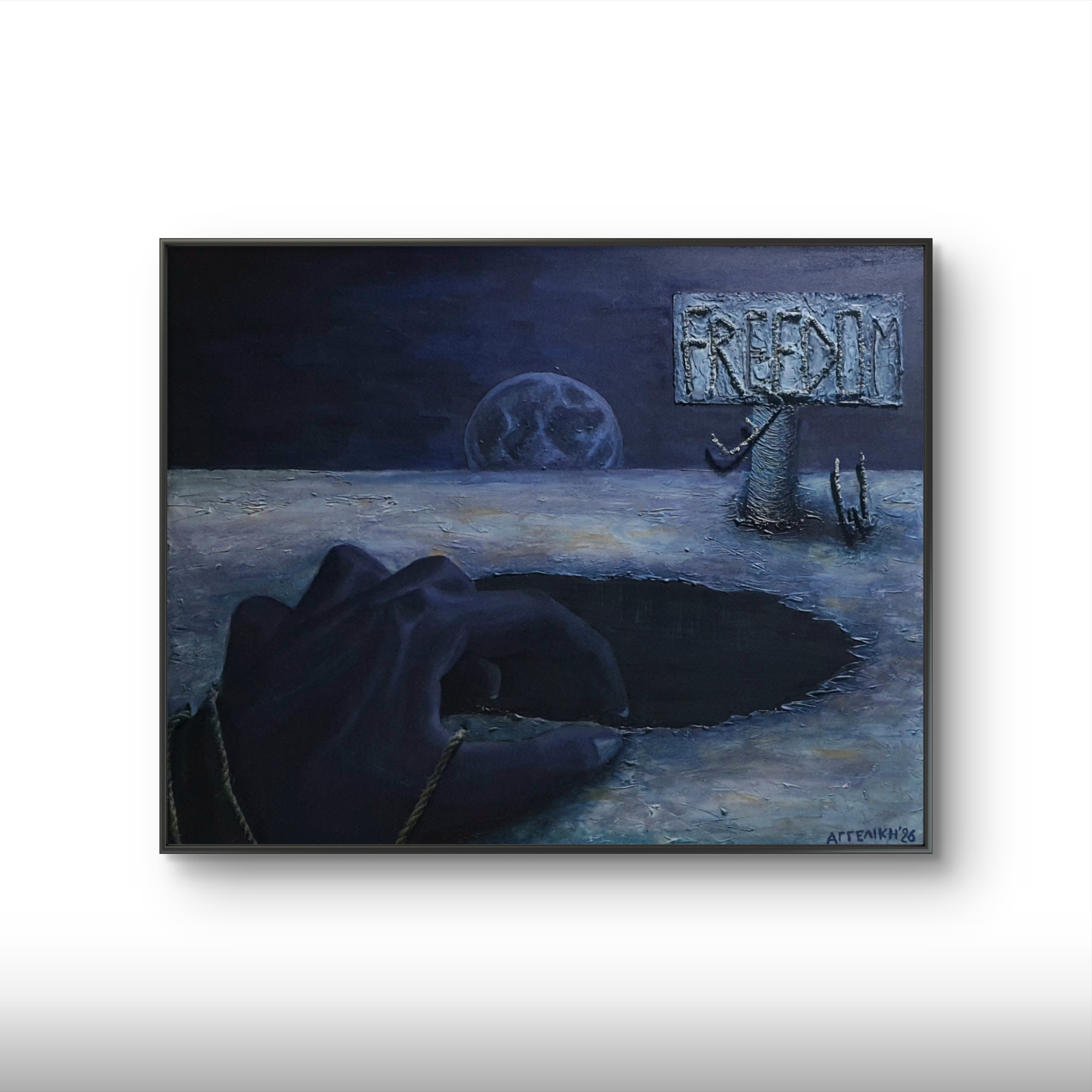
This work emerges from an inquiry into the absurd, finitude and the structures through which existence is organised. Through repetitive movement and symbolic actions, the work follows the tension between imposed patterns and conscious existence. Time operates not simply as duration, but as an awareness that experience is finite. The recognition of the absurd does not produce resignation. It removes the expectation of predetermined meaning and leaves the individual confronted with freedom. Freedom here is therefore not presented as escape. It is a condition that cannot be delegated.
«Revolt»
Acrylic and mixed media on canvas
100 × 80 cm
2026
Painting Description
Revolt continues the inquiry initiated in Condemned to be Free.
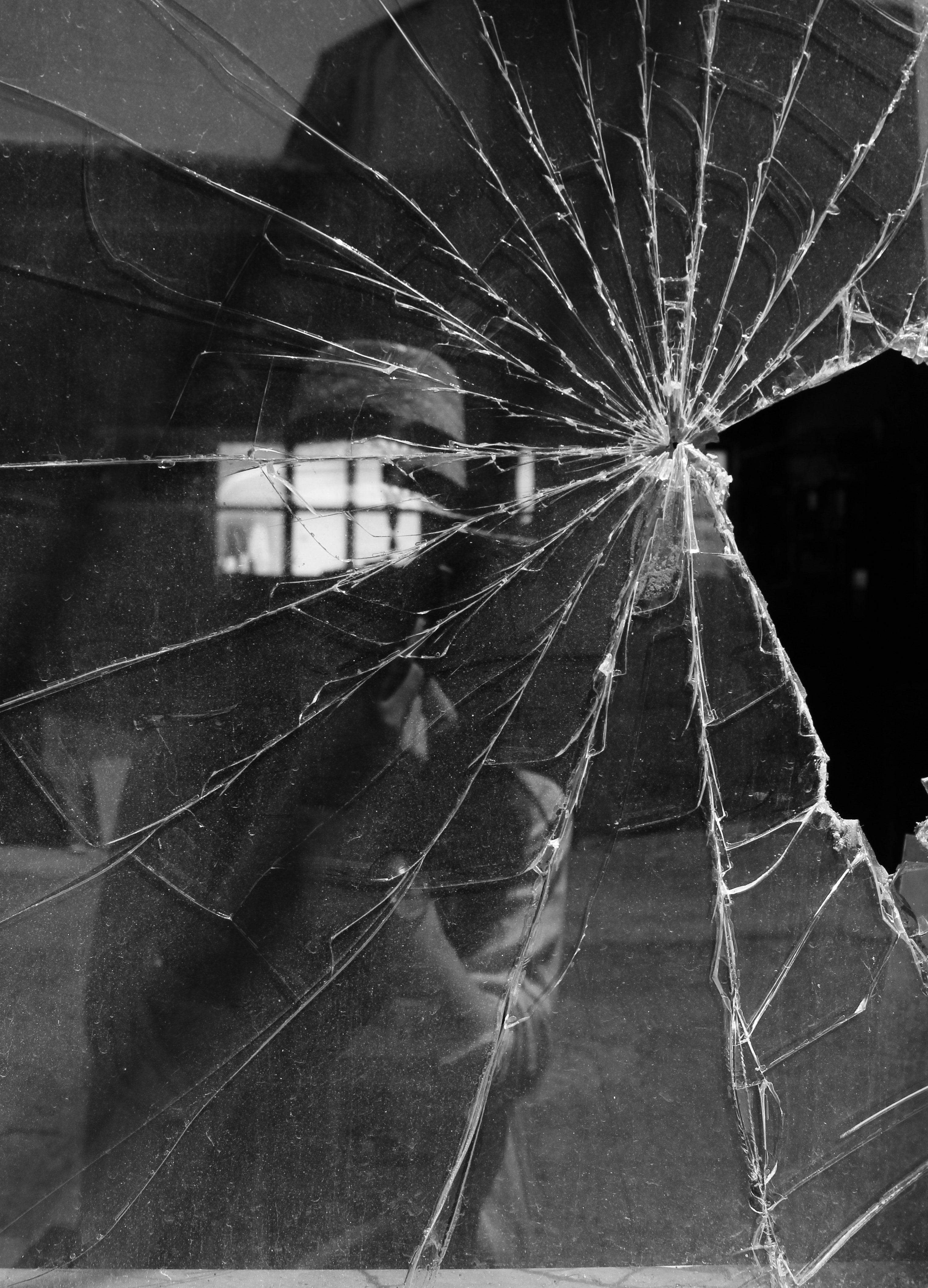
The painting captures the quiet moment of rupture — the threshold before the ripple. The constructed structure still stands. The reflection remains intact, yet it is already at risk of dissolution.
The fracture begins internally.
Only then does the surface break.
Through the worn ground, traces of gold emerge. The valuable reveals itself as the superficial fractures.
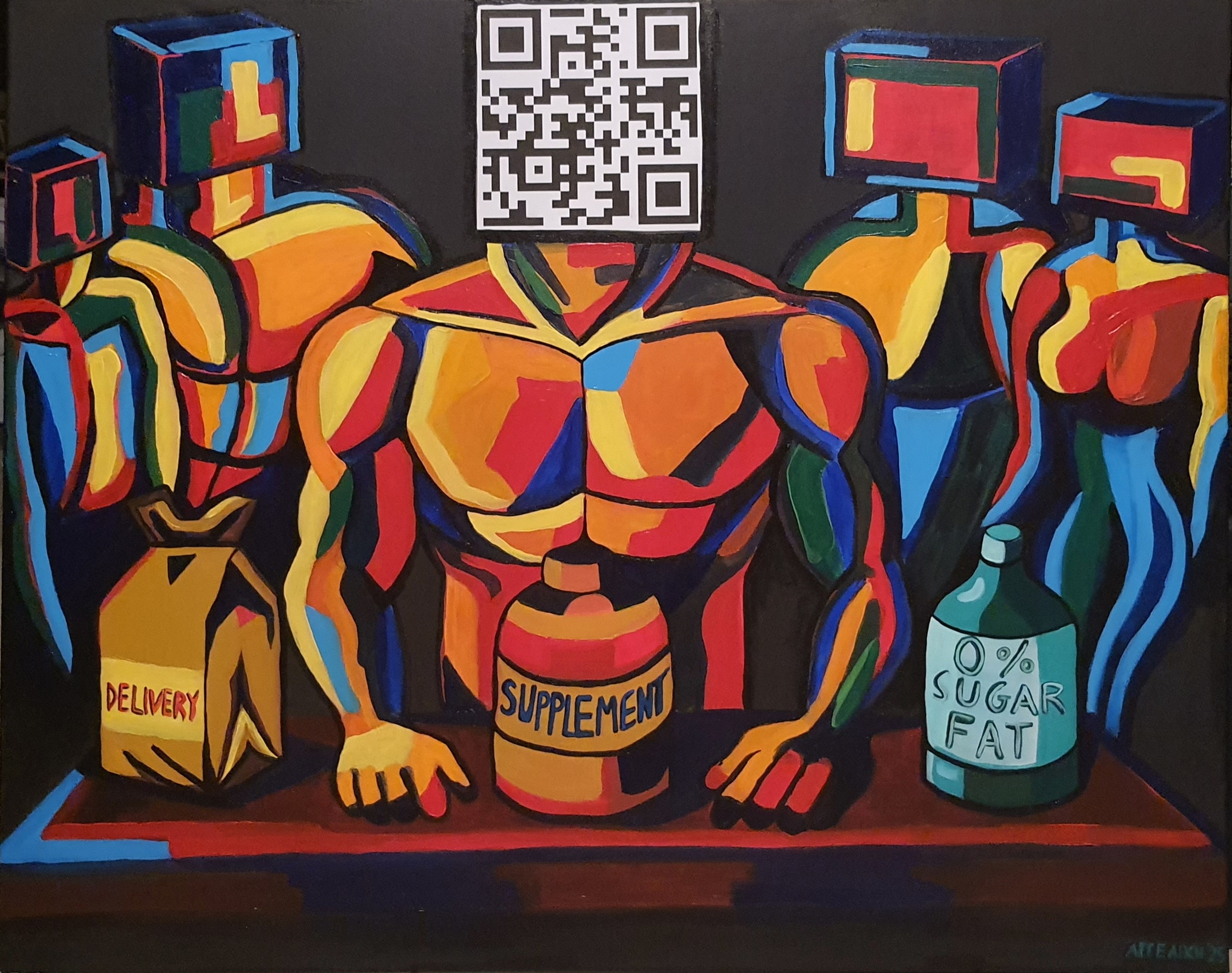
A visual critique of how contemporary nutrition culture, marketing language, and body standards shape not only our choices — but our sense of self. Delivery bags, supplement jars, “0%” labels and coded faces become symbols of a world where health is quantified, identity is optimized, and the human body is treated as a product to be managed.
Each figure, stripped of its face and replaced with a barcode block, reflects the subtle loss of autonomy beneath the promise of “better living.” The fractured, vivid color planes echo the tension between individuality and conformity — a body built through influences that rarely belong to us.
Created as a commissioned piece for a clinical environment, the work mirrors the daily paradox of modern nutrition: when the tools that aim to help us can also reshape us into something standardized.
In a culture of constant ‘improvement,’ even authenticity becomes supplemented.
The Maurice Archive
The Maurice Archive traces the evolution of a four-year artistic investigation across painting, writing and visual research. More than a recurring character, Maurice has become a shifting symbolic figure through which questions of identity, conformity, consciousness and freedom continue to unfold.
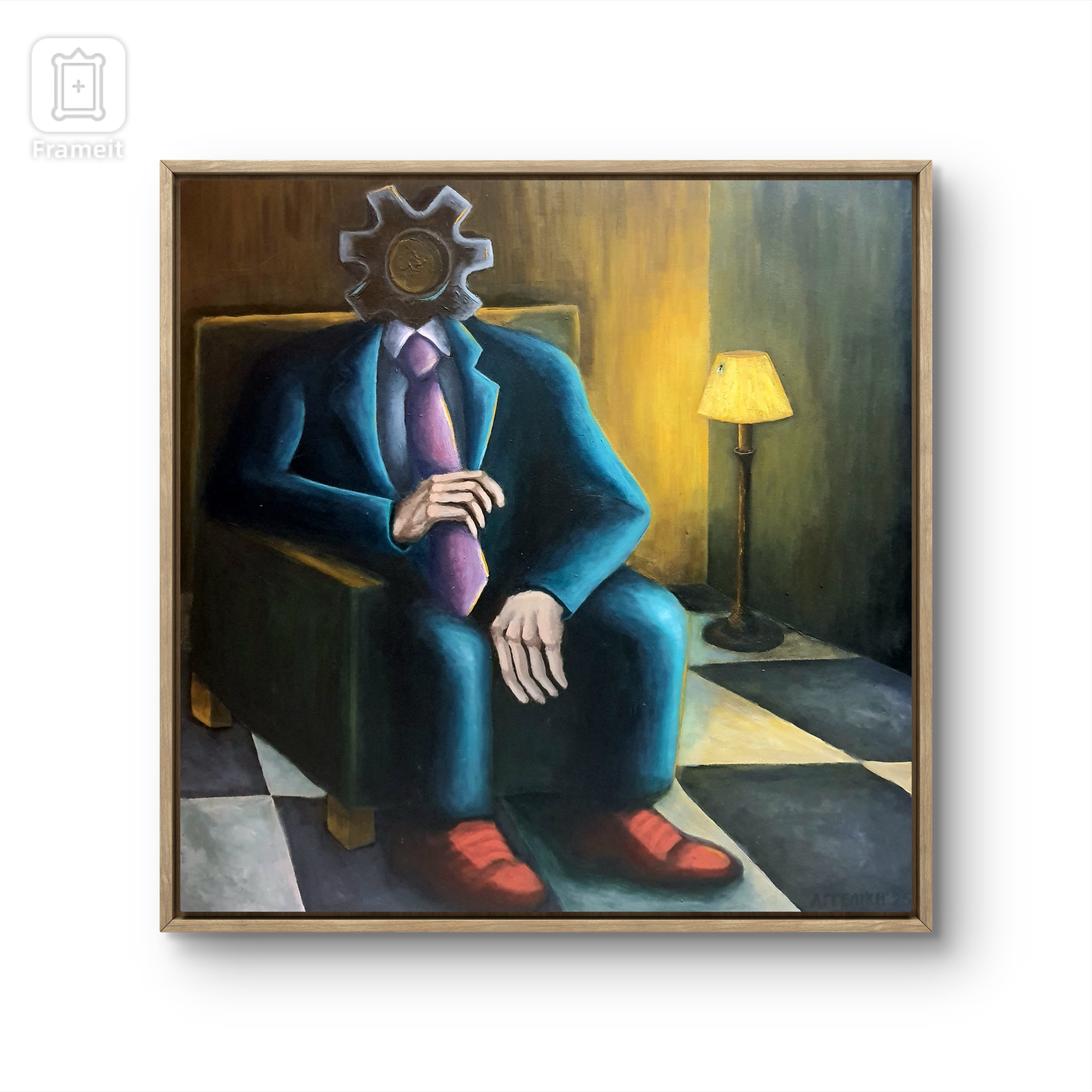
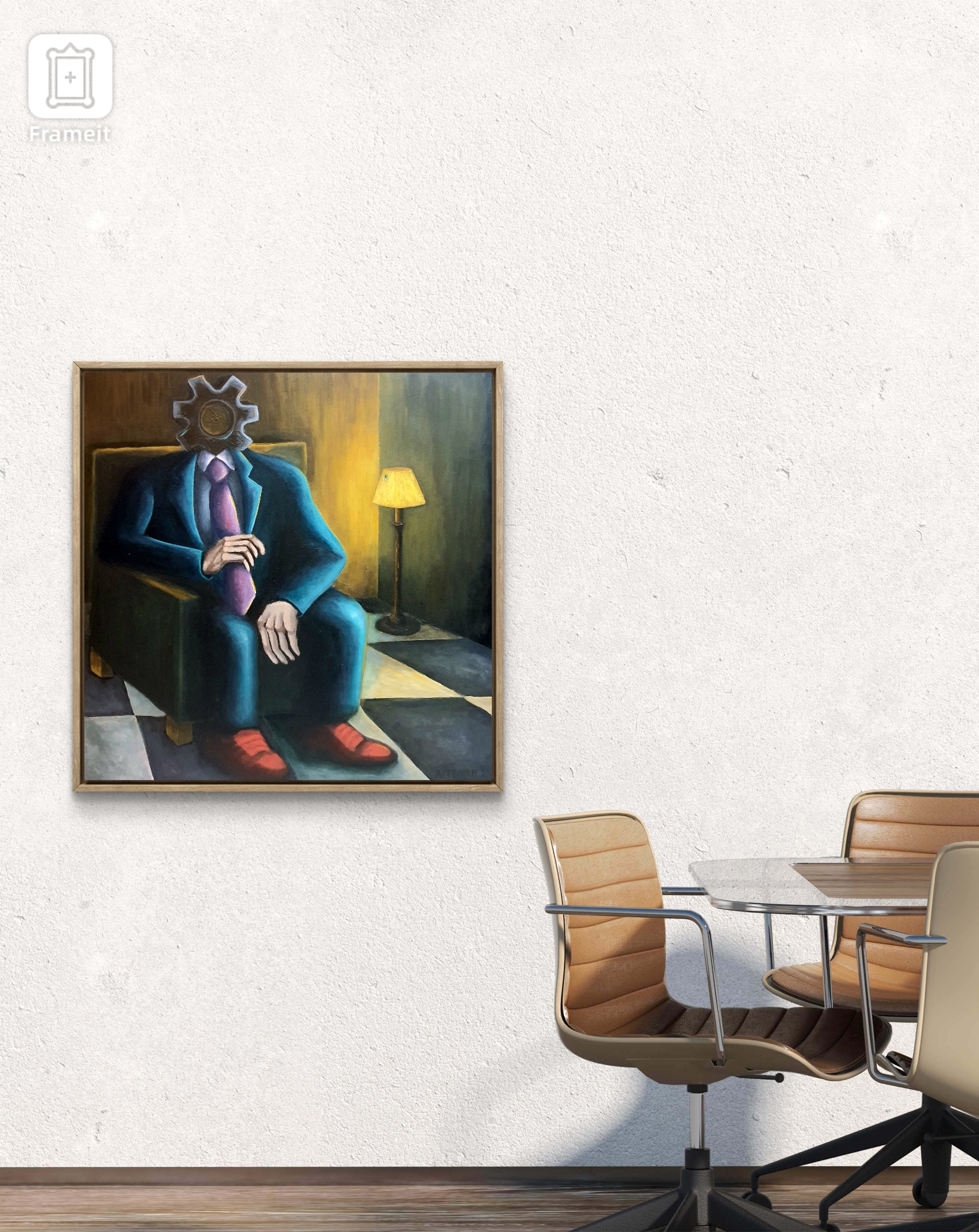
In Maurice Incorporated, the final stage of the trilogy, the persona Maurice reaches the existential point of no return. What once was a man is now a mechanism: the gear replacing the head is not an adornment but an irreversible fusion. It marks the moment where the self, crushed under the demands of the persona, has ceased to resist. Maurice has committed what Camus calls philosophical suicide — the abandonment of one’s inner truth in exchange for the comfort of conformity.
The warm light behind him no longer touches his body; the last remnants of clarity fall just short, illuminating the room but not the man. He sits in a dim, angular space — an interior constructed like a mental cage. His posture is that of someone who has accepted, not questioned. The world around him still glows faintly, but Maurice has stepped out of reach.
The lamp on the right — once a symbol of a possible exit — now hosts a small fly, the Socratic “gadfly,” the persistent irritant that provokes reflection. Its presence is tragically ironic: a call to consciousness sitting inches away from a man who no longer sees. All philosophical inquiry, all friction, all interior rebellion has been shut down. He has chosen the quiet comfort of being a gear in a system rather than the painful freedom of being himself.
The bruised blues, acid greens, and heavy shadows make his suit feel like an exoskeleton rather than clothing. The red shoes and pale hands are the last soft traces of his humanity — remnants of a self that could have resisted but didn’t. His body exists, but the person is gone.
Maurice Incorporated is the portrait of a man who surrendered to the persona he built to survive. He is no longer tormented, no longer conflicted — and that is precisely the tragedy. In accepting the role completely, he has erased the inner life that once strained beneath it. This final chapter is not a fall, but a flattening: the moment when a human becomes a function.
Maurice is now incorporated — not merely in the corporate sense, but in the literal, existential sense. The system lives through him, and he, in turn, vanishes inside it.
«Corporate Maurice»
Oil on canvas, 60*73
2024
Painting Description
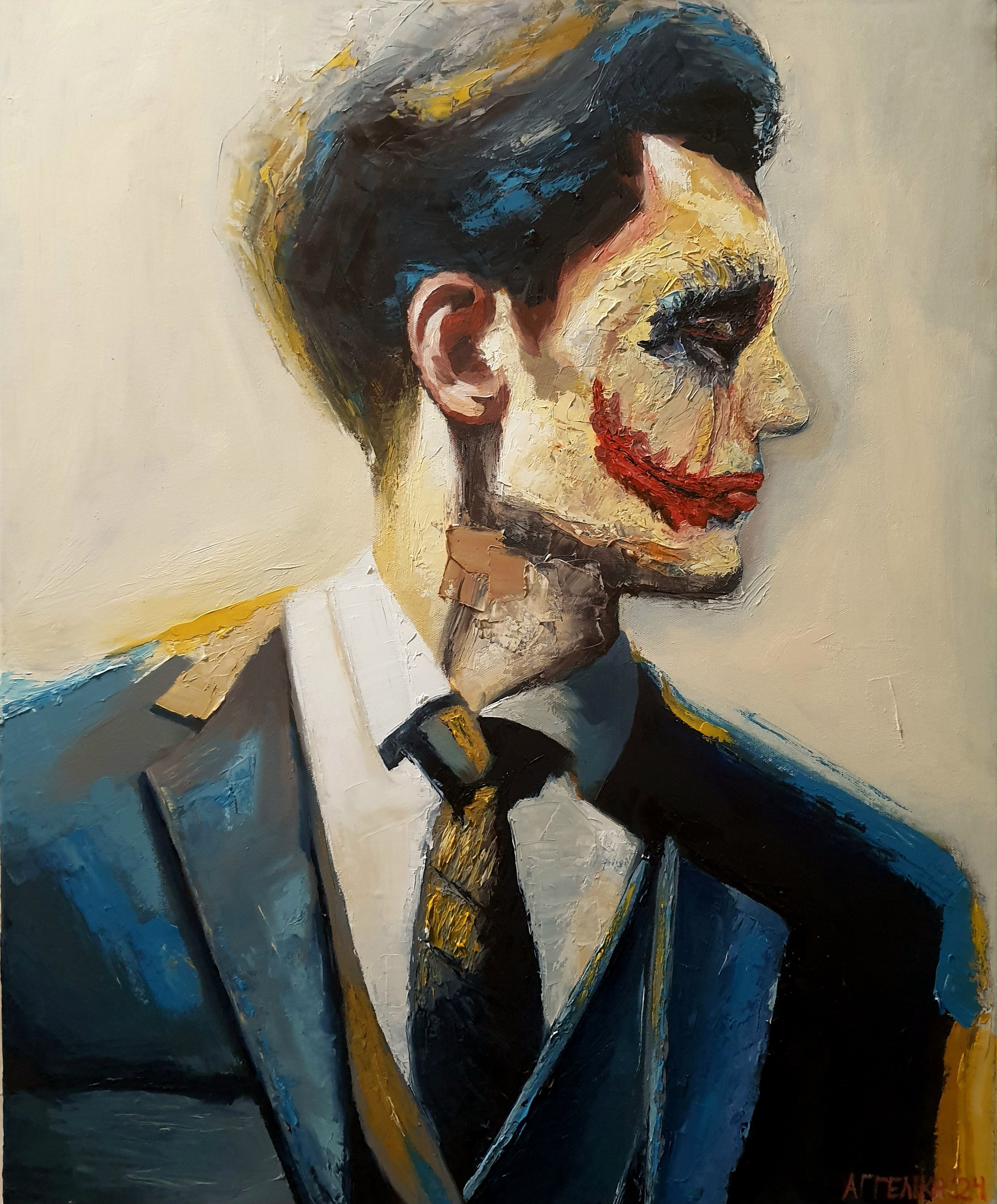
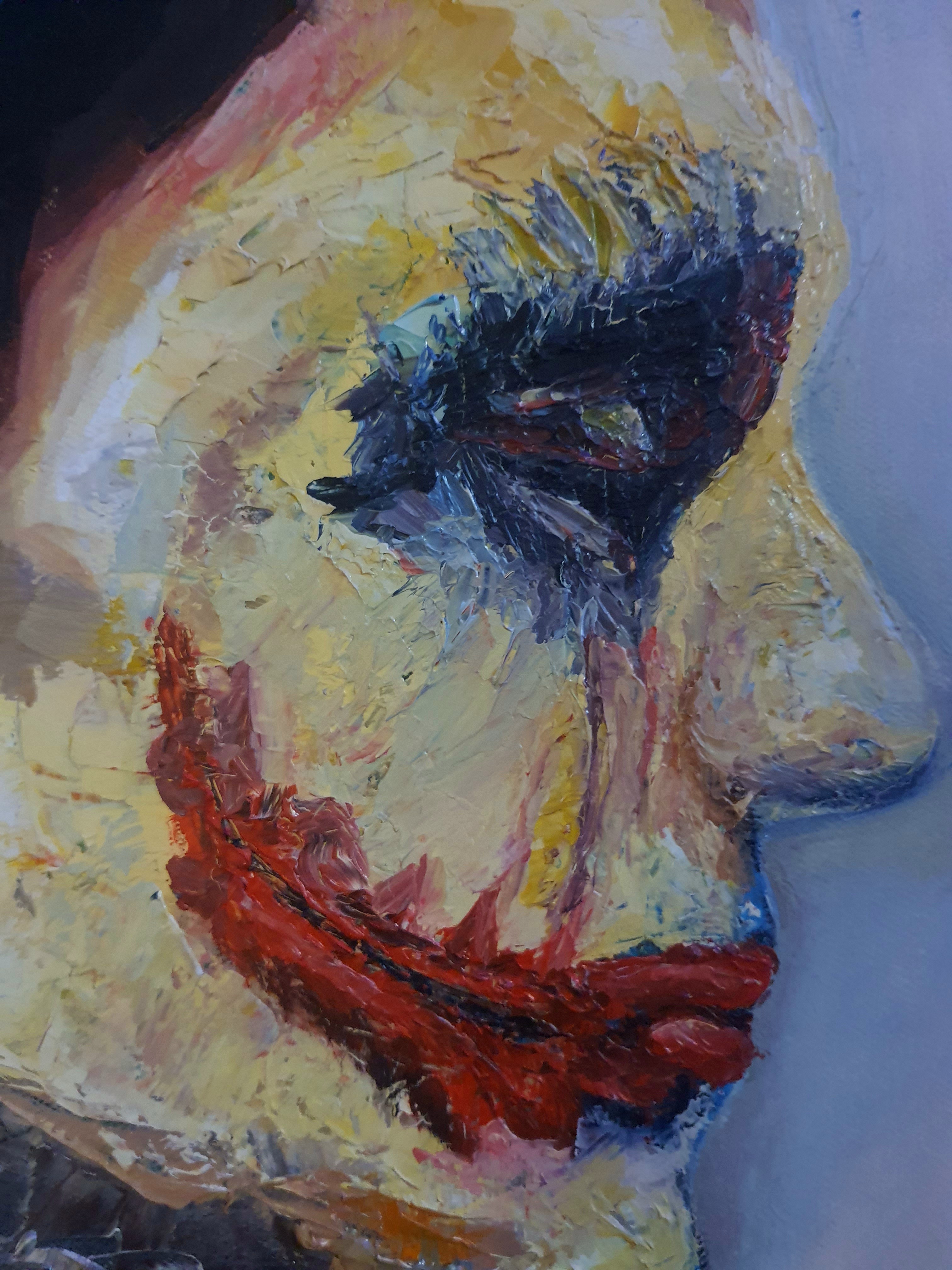
In this second stage of the trilogy, Maurice has begun to merge with the role he performs. Corporate Maurice presents him not simply as a man in profile, but as an individual whose identity is slipping beneath a constructed persona. The Joker-like distortion of his face is no longer theatrical — it is the mask that has fused with the skin.
Muted tones evoke emotional distance, while the sharp red shadows expose fissures beneath the surface. Blue and yellow tensions fracture the figure into conflicting halves, revealing a self stretched between compliance and rebellion. The impasto surface introduces instability: Maurice is vibrant, volatile, and beginning to crack.
As the persona becomes habitual, Maurice enters a state of psychological automation. He is caught between authenticity and performance, no longer entirely human yet not yet fully mechanized. The painting marks the moment where the mask becomes the intermediary stage — the bridge between the intact man of the first painting and the post-human mechanism he will become in Maurice Incorporated.
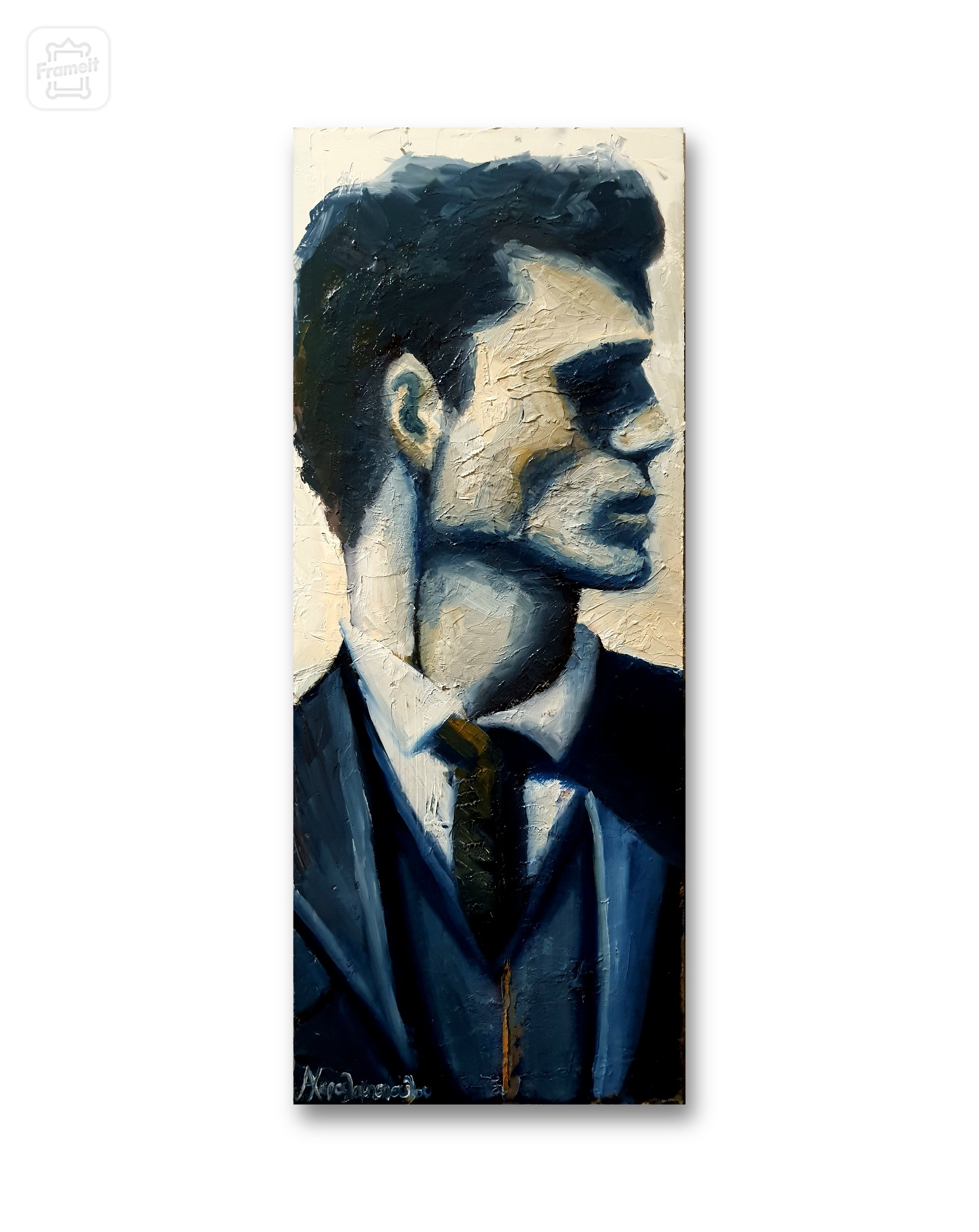
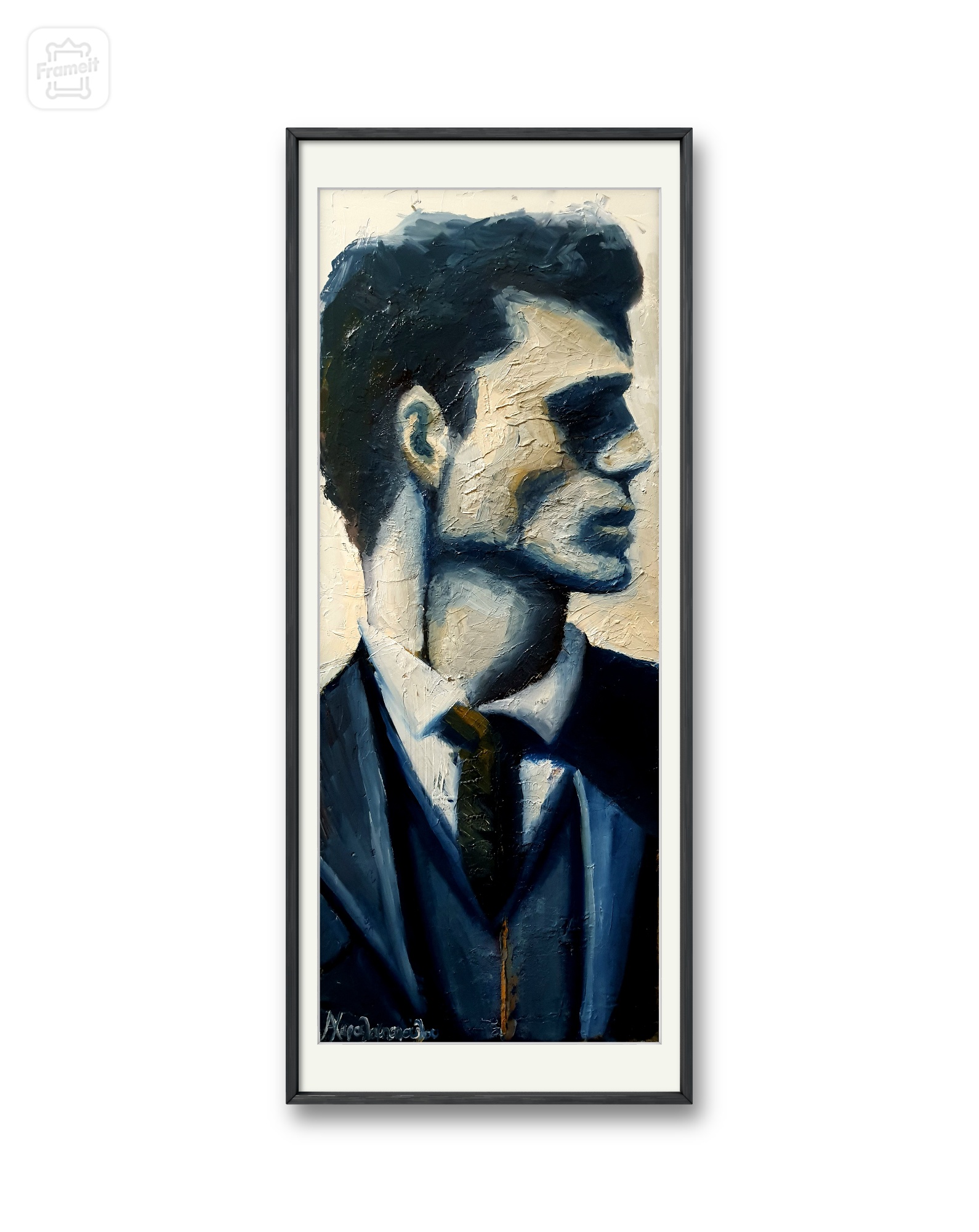
«Maurice»
Oil on wood panel, 50*20
2023
Painting Description
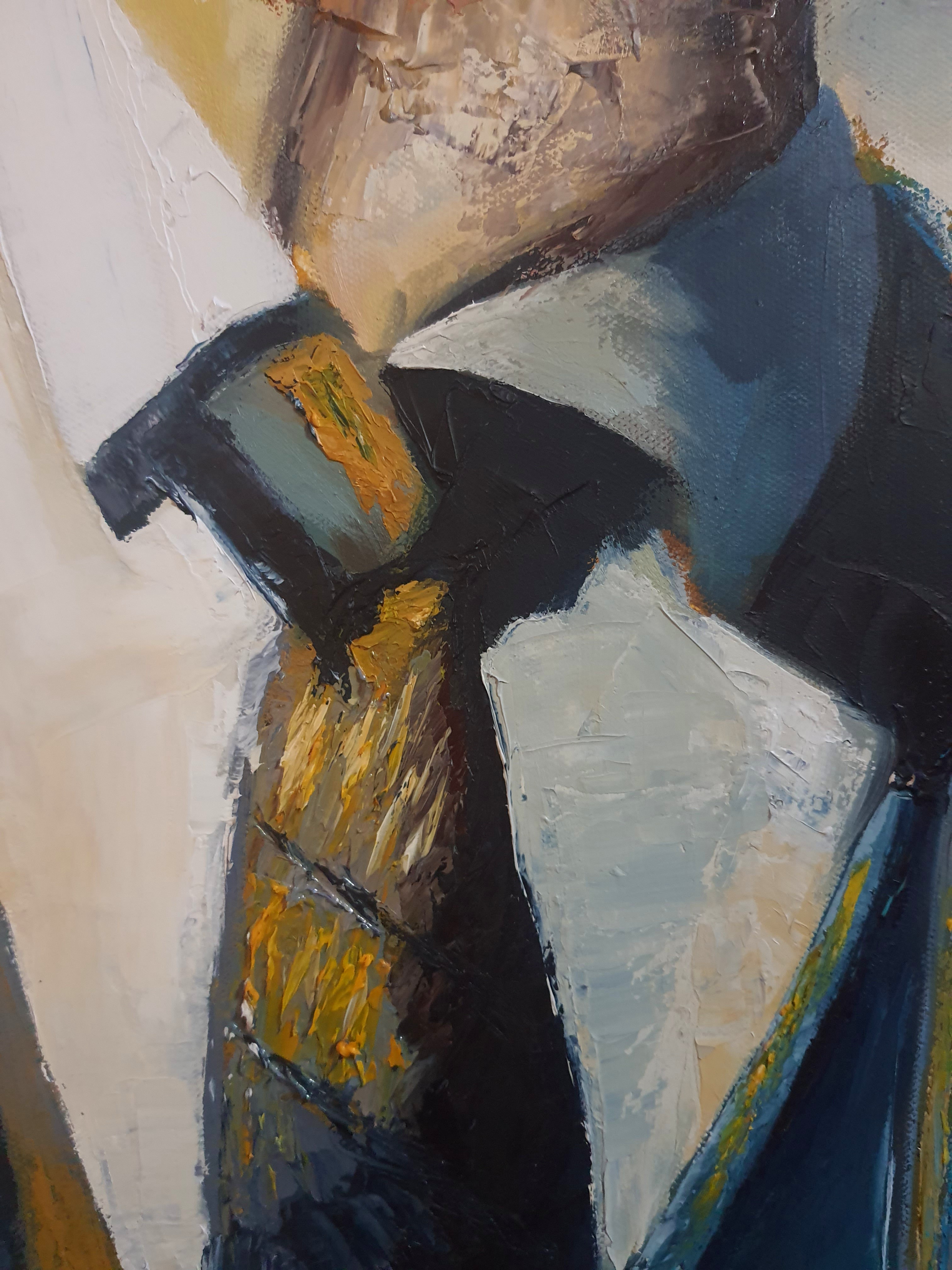
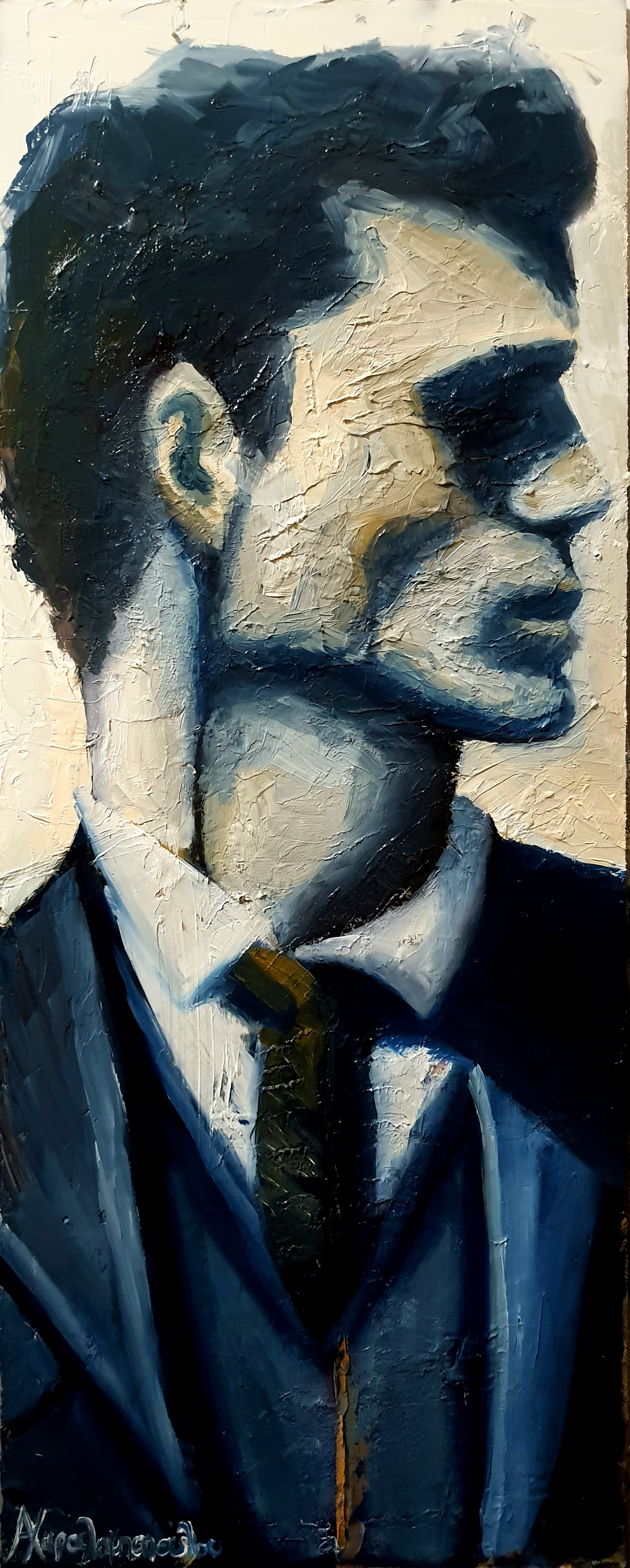
Maurice introduces the persona at his most intact — the moment before fragmentation begins. Inspired by the figure from Maurice Joly’s “The Success Manager,” this first portrait captures the archetype of the confident professional: composed, polished, outwardly successful. But beneath the clean profile lies a subtle tension.
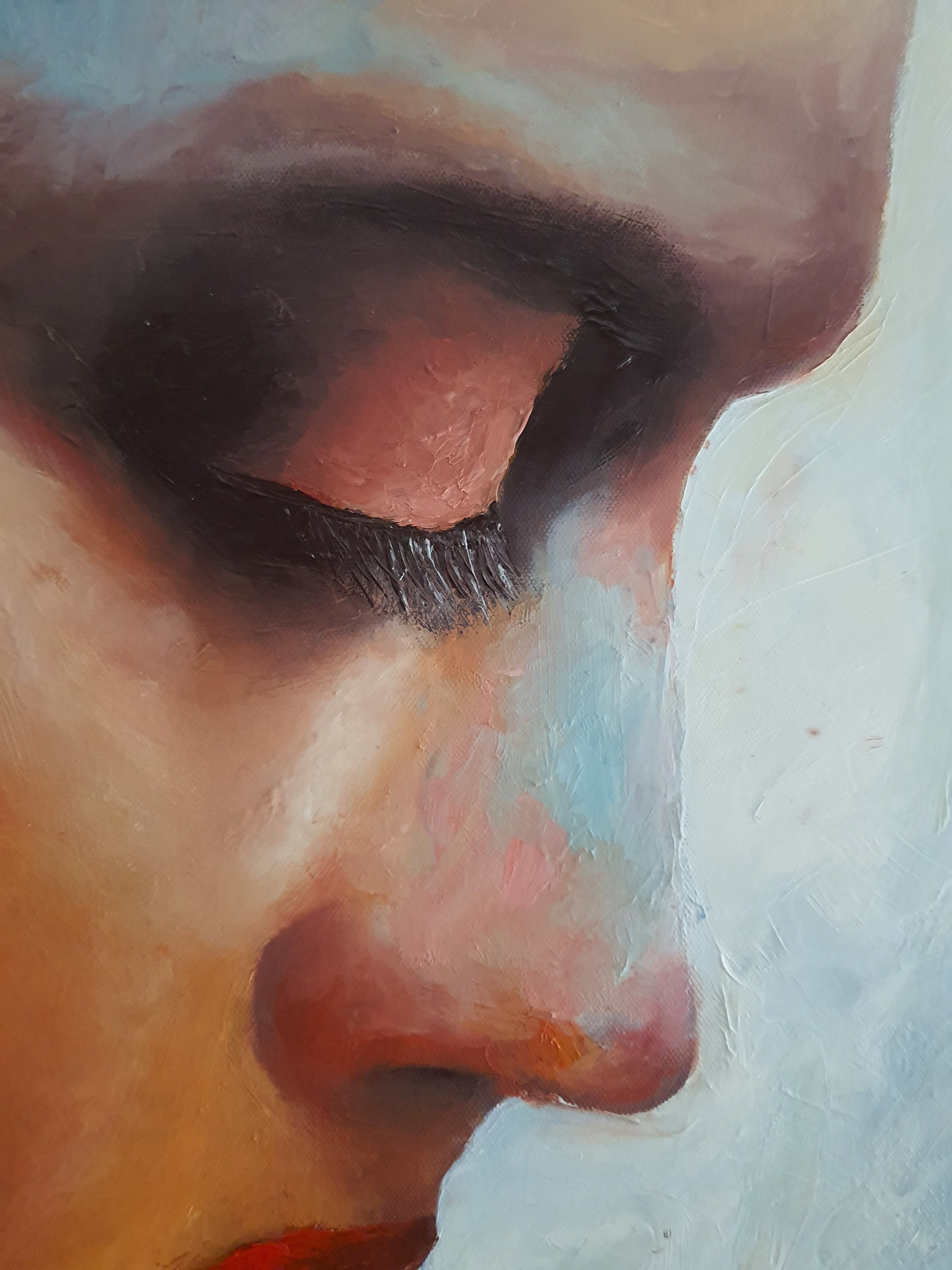
Rendered in cool blues with expressive impasto, Maurice’s face is both precise and unstable, suggesting that identity here is already under negotiation. The rigid suit contrasts sharply with the textured flesh, revealing a man holding himself together through discipline and image. The slight turn of the head — away from the viewer — signals avoidance, a quiet refusal to confront what is coming.
This work establishes Maurice as a symbol of early-stage conformity: someone who still believes in the rules, the ladder, and the persona he constructed. The cracks are minimal but present. The mask is not yet visible, but the psychological strain is already forming. In retrospect, Maurice becomes the “before” — the seed of the transformation that unfolds in Corporate Maurice and culminates in Maurice Incorporated.
Figurative & Portraits
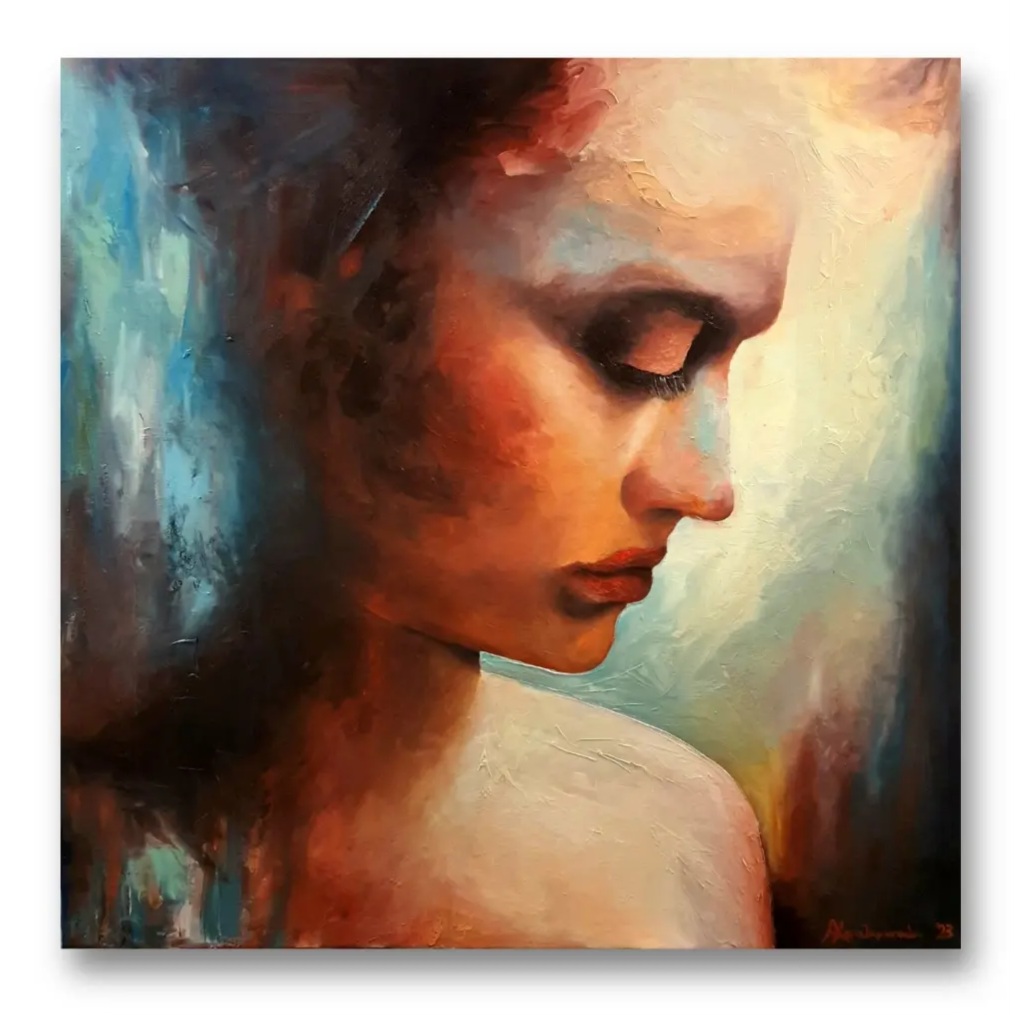
«Nefeli»
Oil on canvas, 100*100
2023
Painting Description
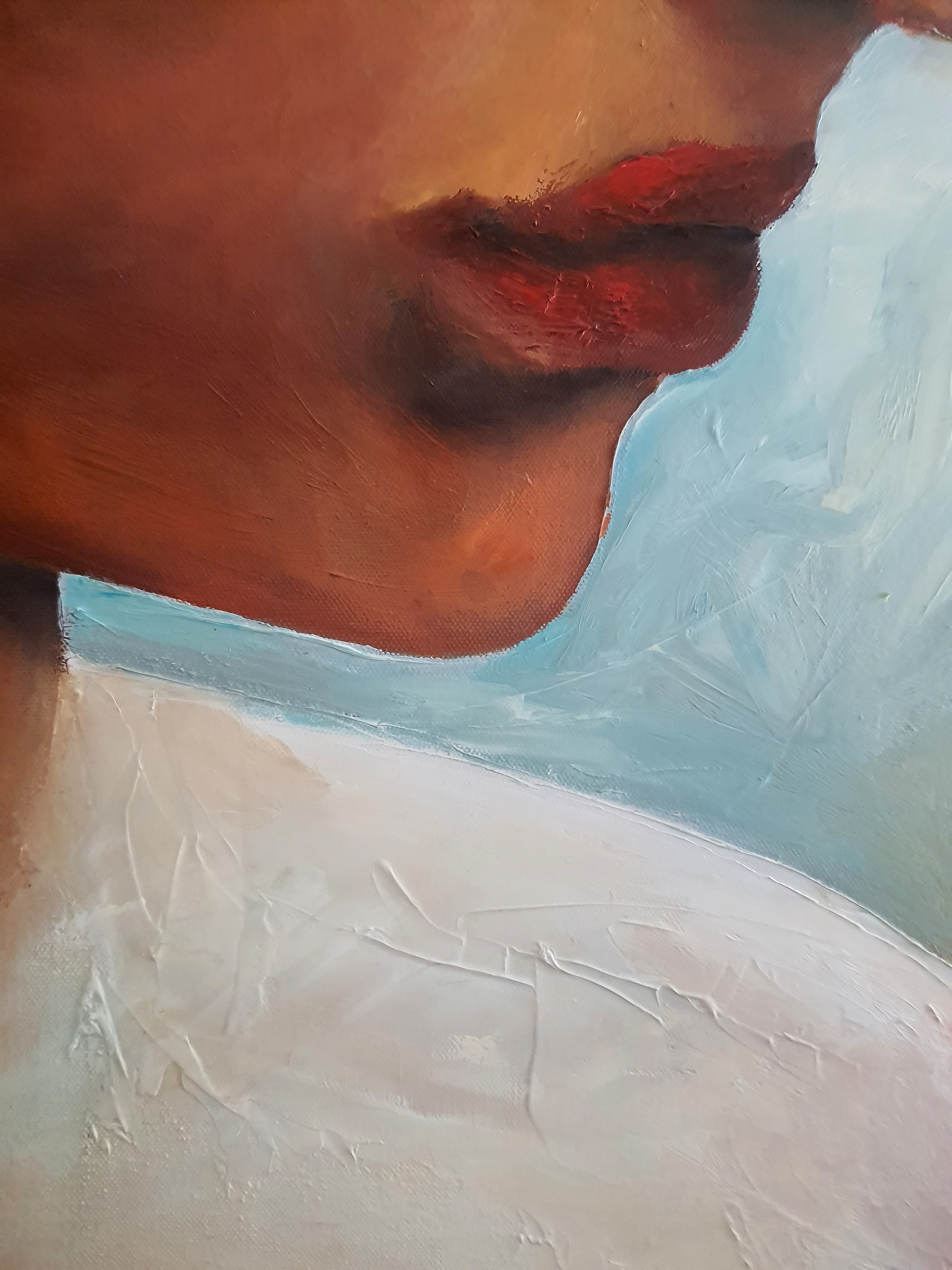
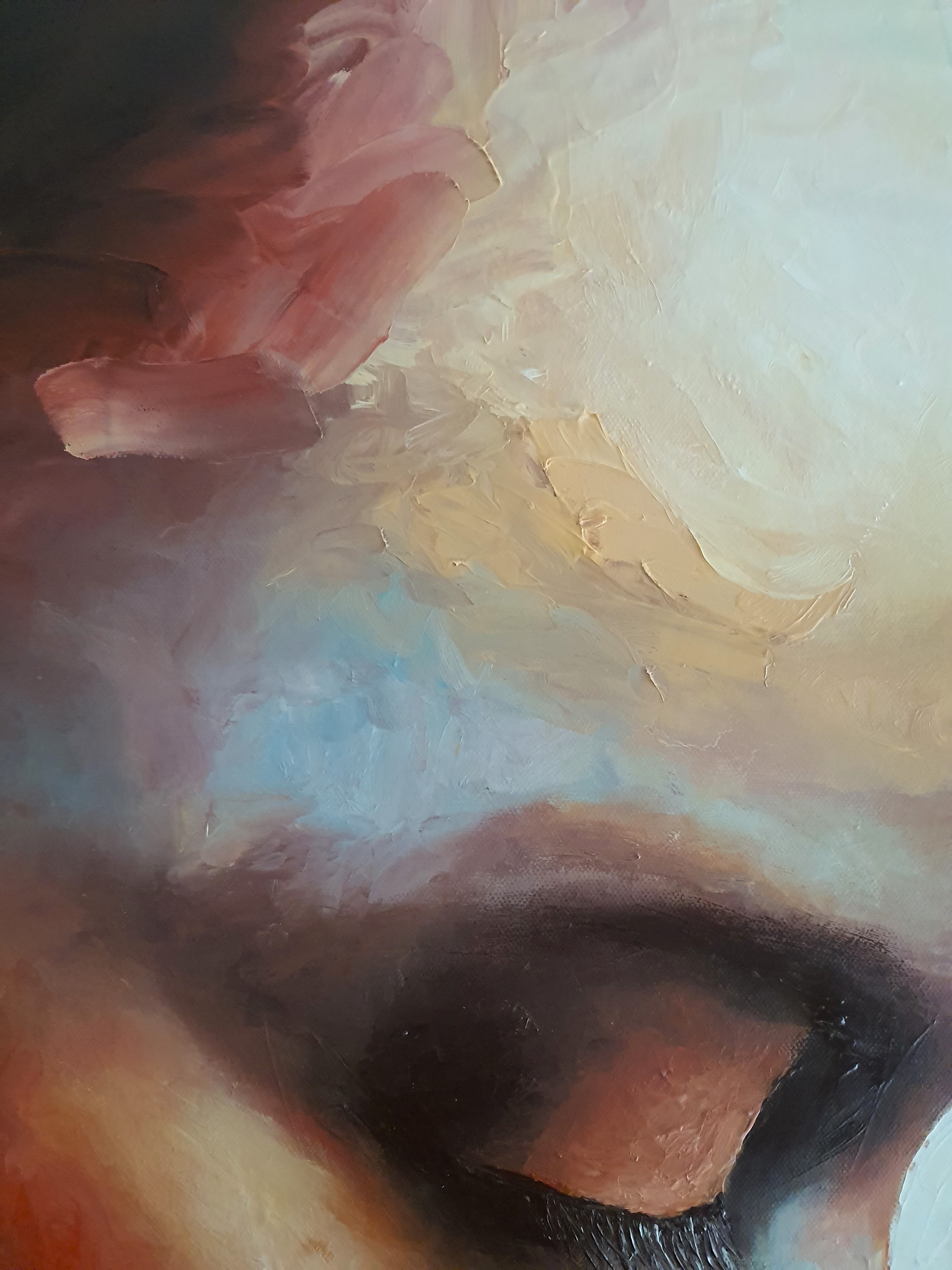
«Nefeli» embodies the primal duality of creation versus destruction. The face is divided—one side meticulously rendered, alive with detail, while the other dissolves into darkness, caught in the half-process of becoming or disappearing.
The piece evokes Schrödinger’s paradox, a subject both existing and transforming. It asks the timeless question: Is she being created or erased? The answer remains suspended in the moment.
«Embrace of Solitude»
Mixed Media (Acrylics & Charcoal) on canvas, 60*90
2024
Painting Description
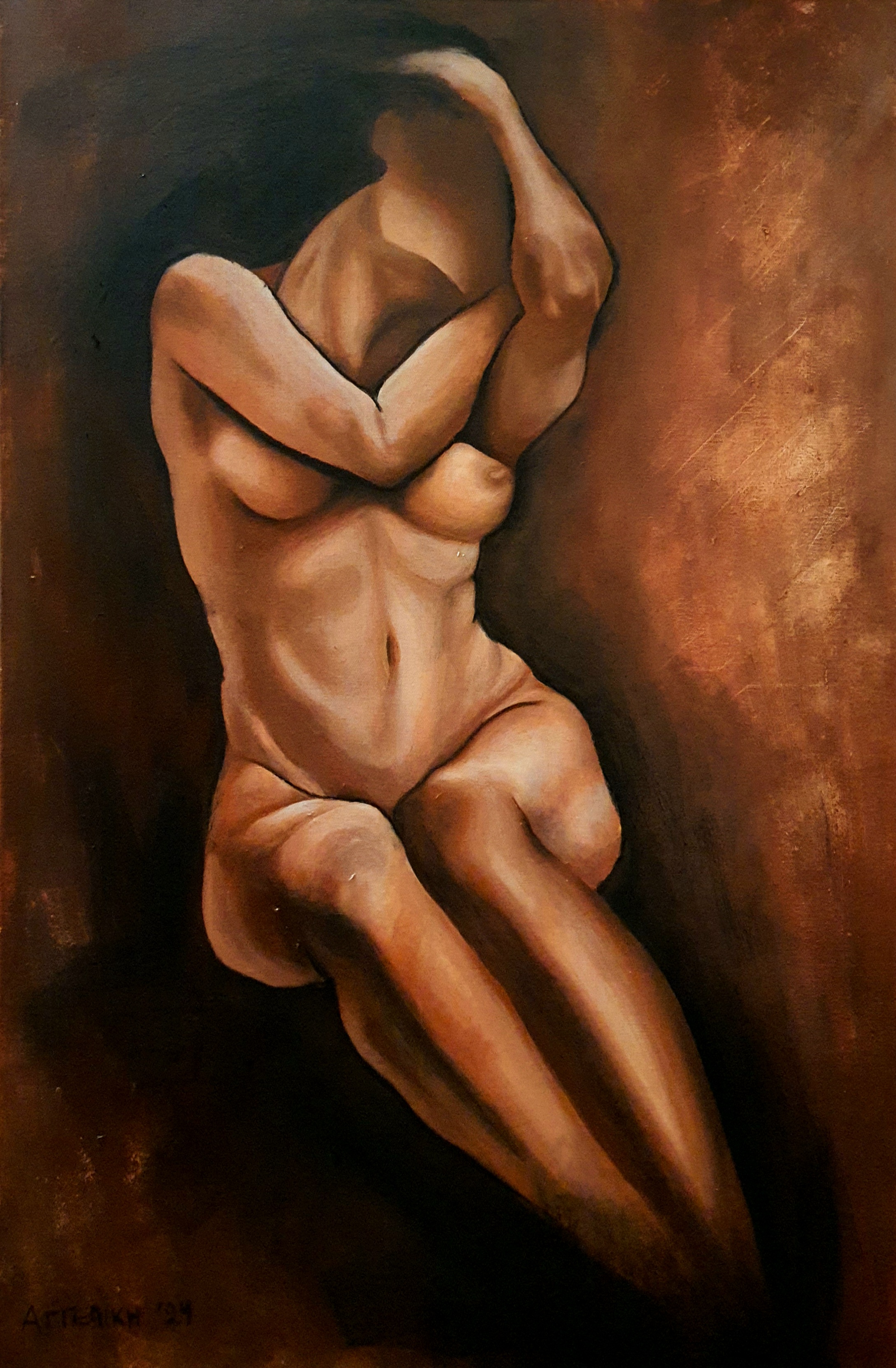
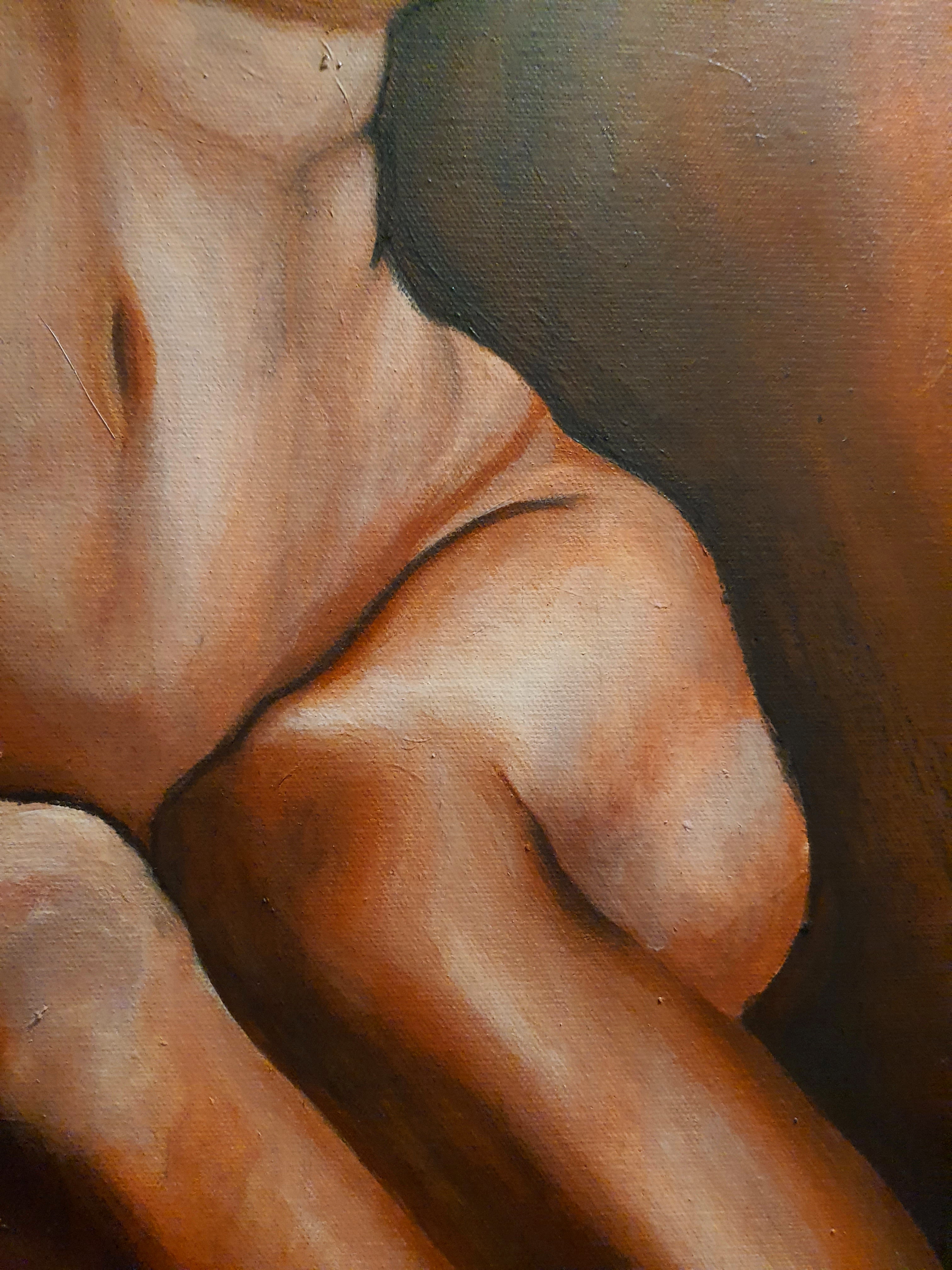
«Embrace of Solitude» captures the raw beauty and vulnerability of the human form through acrylics and charcoal. The figure, wrapped in introspection, is both shielded and exposed—balancing strength and fragility. Rich, earthy tones and chiaroscuro create depth, blending realism with abstraction. This piece invites viewers to reflect on solitude as both a retreat and a revelation.
«Vestige»
Oil on canvas, 102*72*5
2025
Painting Description
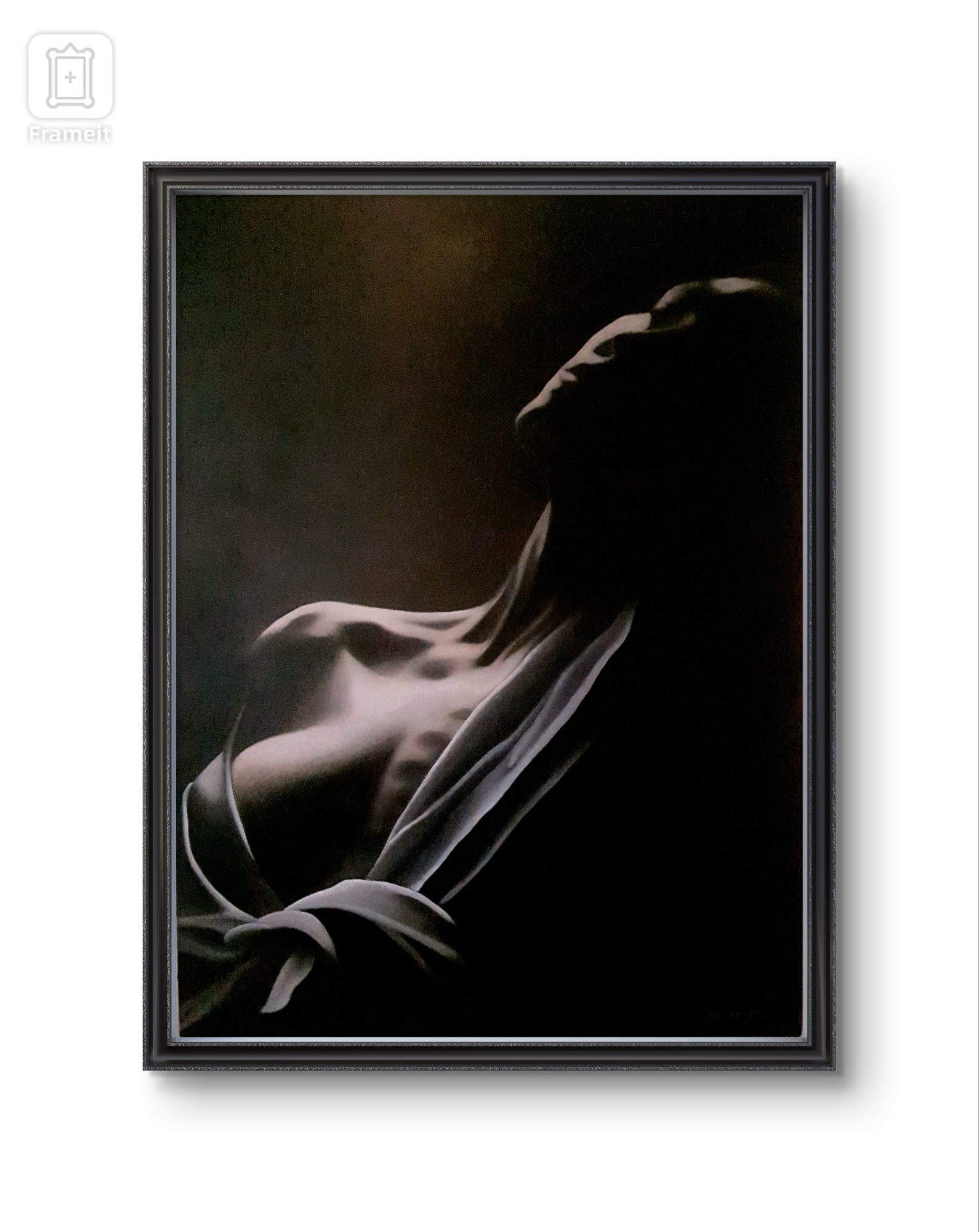
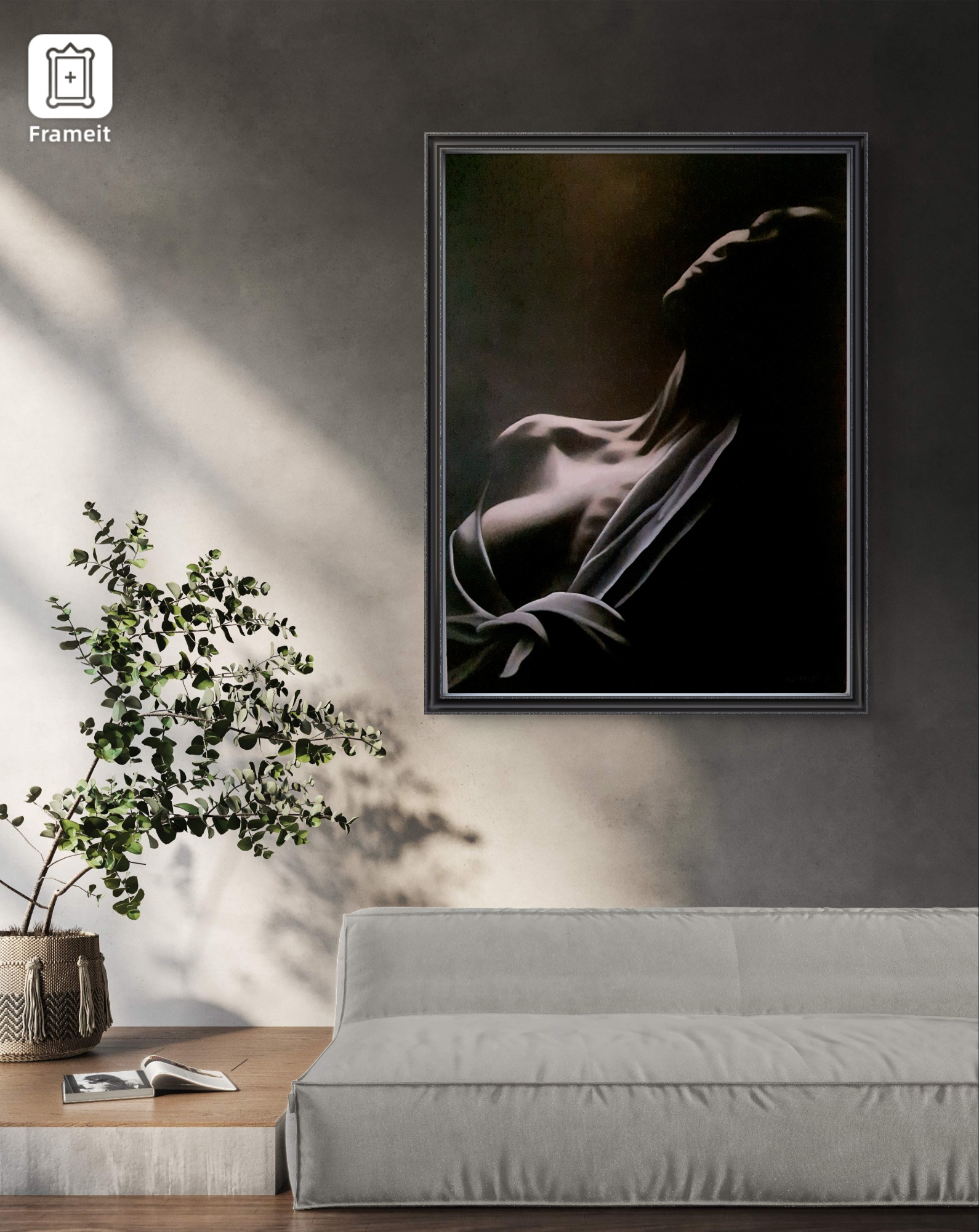
A figure suspended between presence and disappearance, Vestige is a visual meditation on intimacy, detachment, and the silent erosion of identity. Illuminated by a restrained chiaroscuro, the form emerges from shadow not to be revealed, but to be remembered—as if light itself hesitates to commit.
Painted in a limited palette with layered warm glazes, the work evokes both the permanence of classical sculpture and the vulnerability of flesh. The facelessness is deliberate; the ambiguity, intentional. There is no narrative, only atmosphere—no story, only the echo of one.
In Vestige, I explore the human form not as portraiture, but as presence fading into absence. What remains is not the self, but its trace. The last warmth. The last breath. The residue of being.
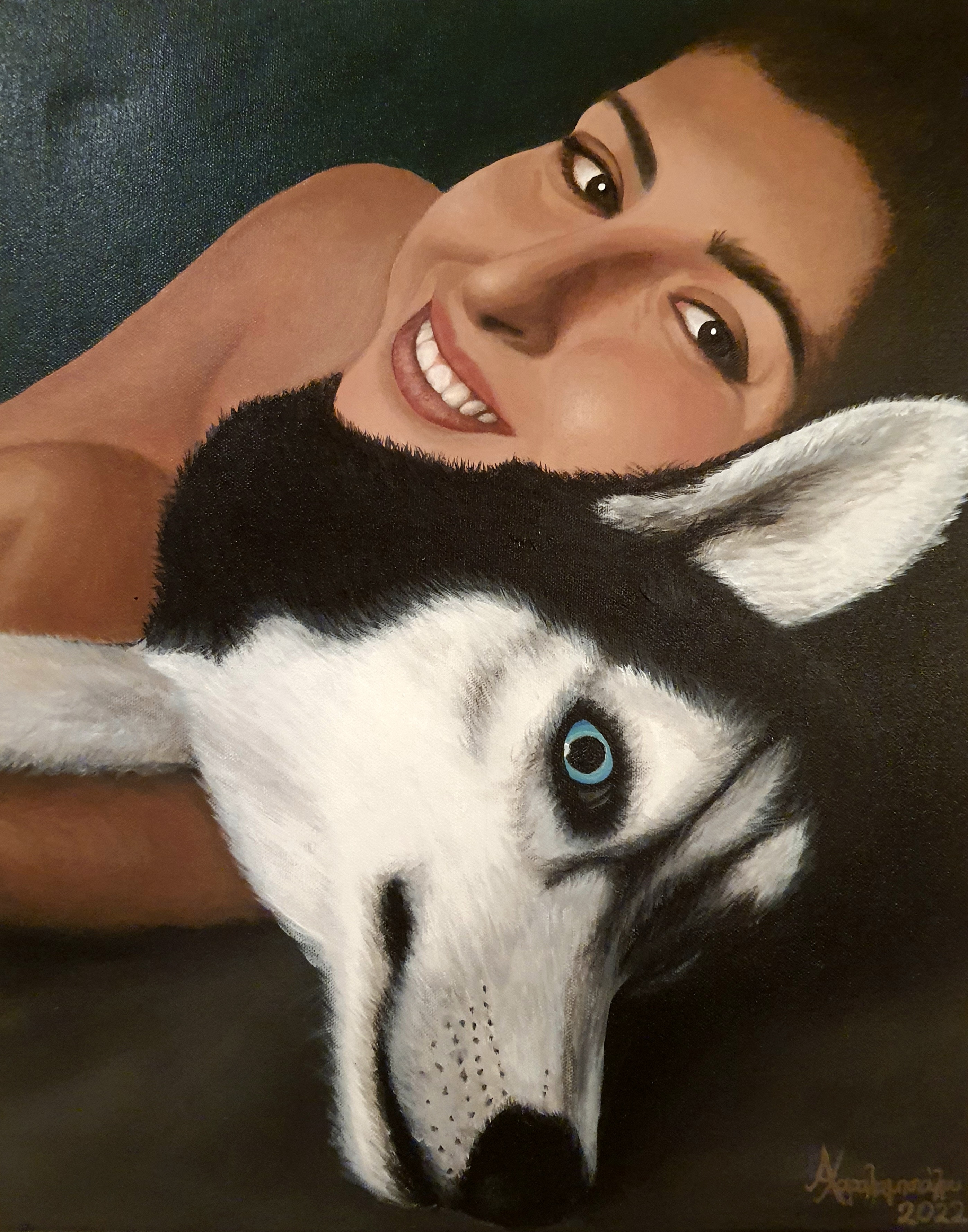
«Lady and the husky»
Acrylic on canvas, 40*50
2022
Painting Description
A personal tribute, Lady and the Husky was created as a gift for my sister. Painted in acrylics, the piece employs sfumato techniques to achieve a seamless, soft gradient effect, enhancing the depth and atmosphere of the composition.
Chiaroscuro Nudes
»Noir vol.4″
Oil on canvas, 90*60
2024
Painting Description
Noir Vol. 4 captures the delicate balance between vulnerability and mystery. The figure is partially revealed through dramatic chiaroscuro, where deep shadows and soft light create an atmosphere of solitude. Blurred edges and expressive brushwork add to the ambiguity, leaving the viewer suspended between intimacy and detachment.
«Noir vol.3»
Oil on canvas, 70*50
2023
Painting Description
A study in light, shadow, and intimacy, Noir Vol. 3 explores the tension between presence and obscurity. The figure emerges from darkness, softened by sfumato blending, yet remains elusive—capturing the fleeting nature of perception and emotion. The interplay of chiaroscuro enhances the drama, evoking a sense of solitude and quiet introspection.
«Queen Atalanta»
Oil on canvas, 100*40
2023
Painting Description
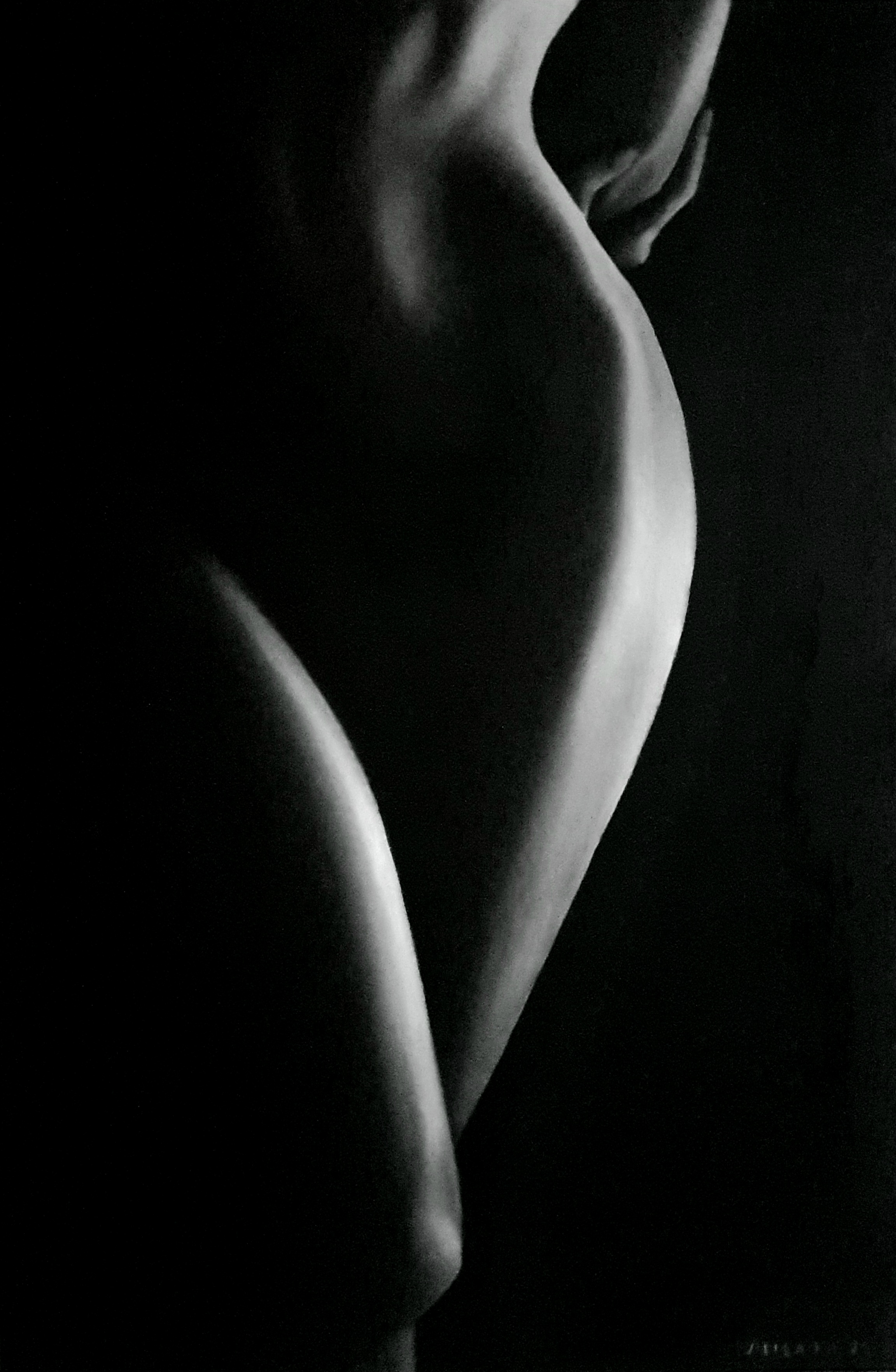
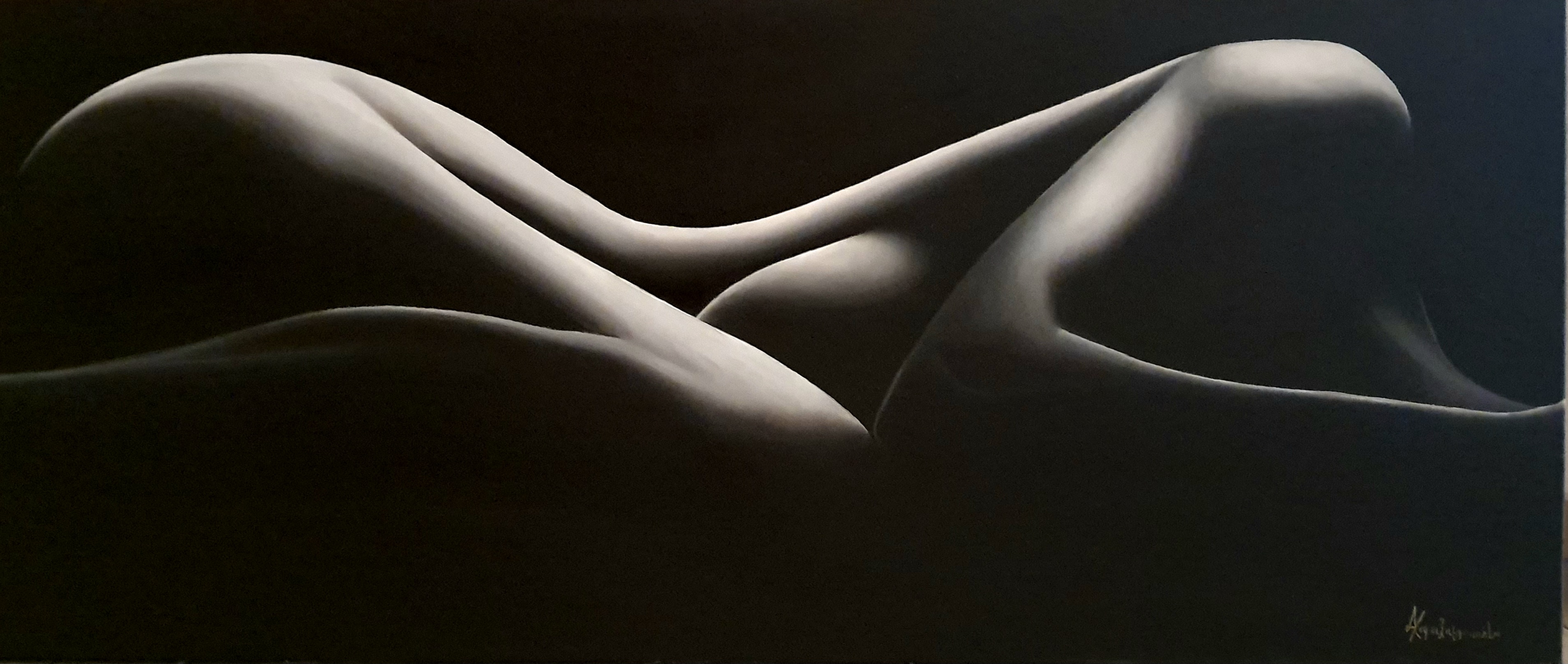
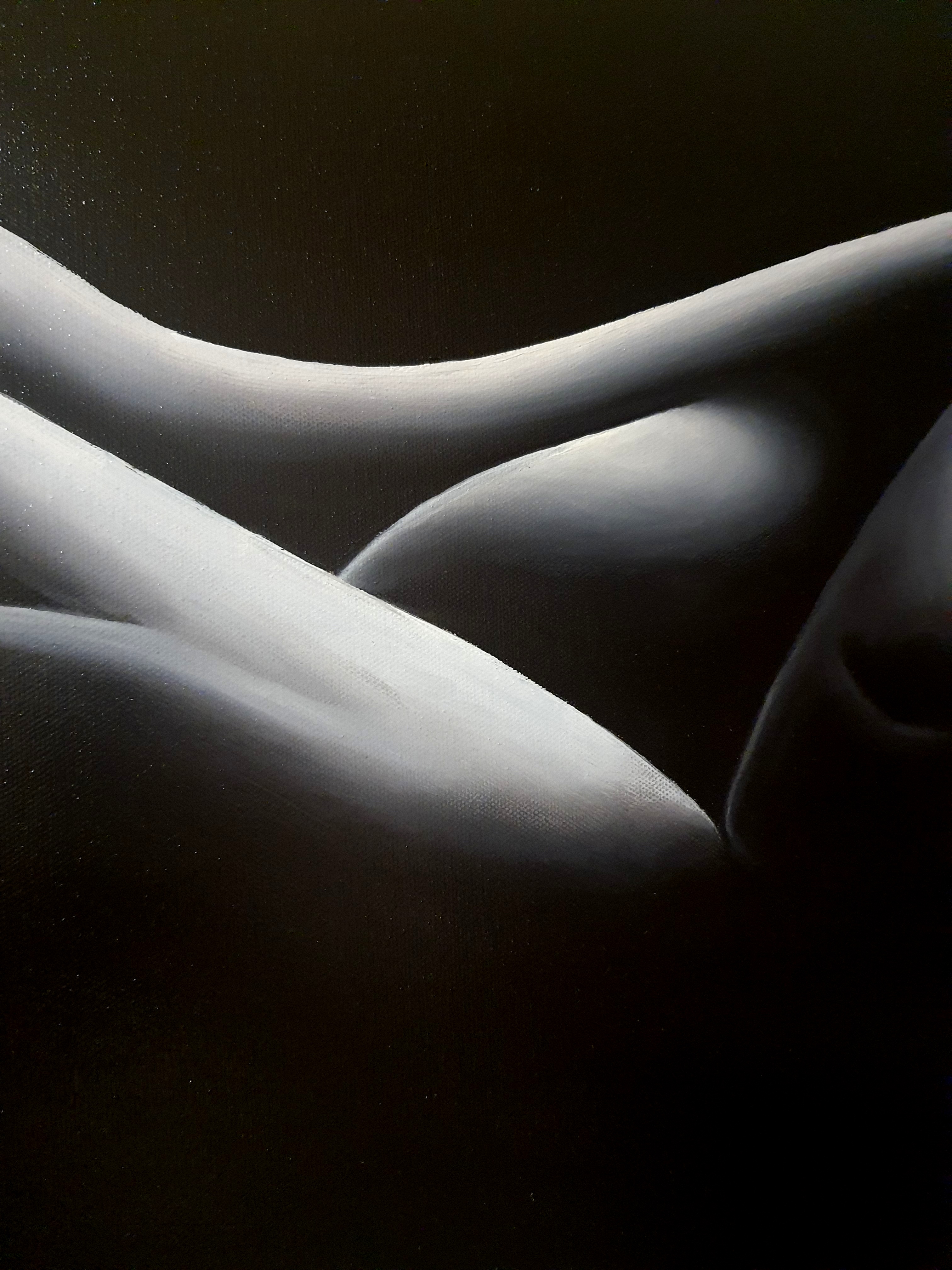
A celebration of elegance, strength, and form, Queen Atalanta captures the power of the female body through the interplay of light and shadow. The elongated composition and flowing contours evoke a sense of fluidity and grace, while the deep contrast in chiaroscuro enhances the sculpture-like presence of the figure. The restrained palette focuses attention on the soft yet defined anatomy, embodying both resilience and sensuality.
This piece transforms the mythological Atalanta into an abstract yet commanding presence, stripping away unnecessary details to reveal pure form, movement, and quiet dominance.
«Echo»
Acrylic on canvas, 60*50
2023
Painting Description
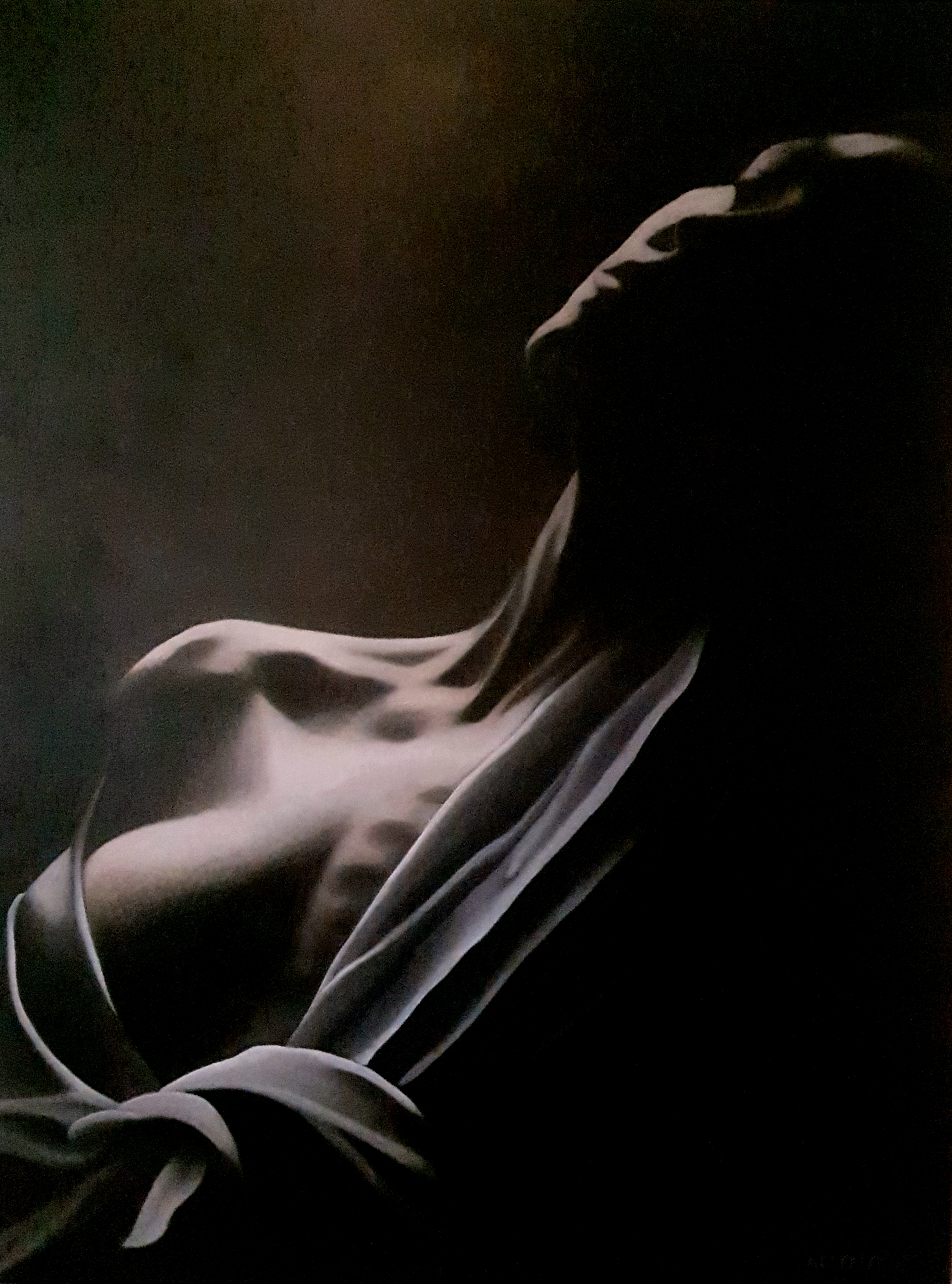
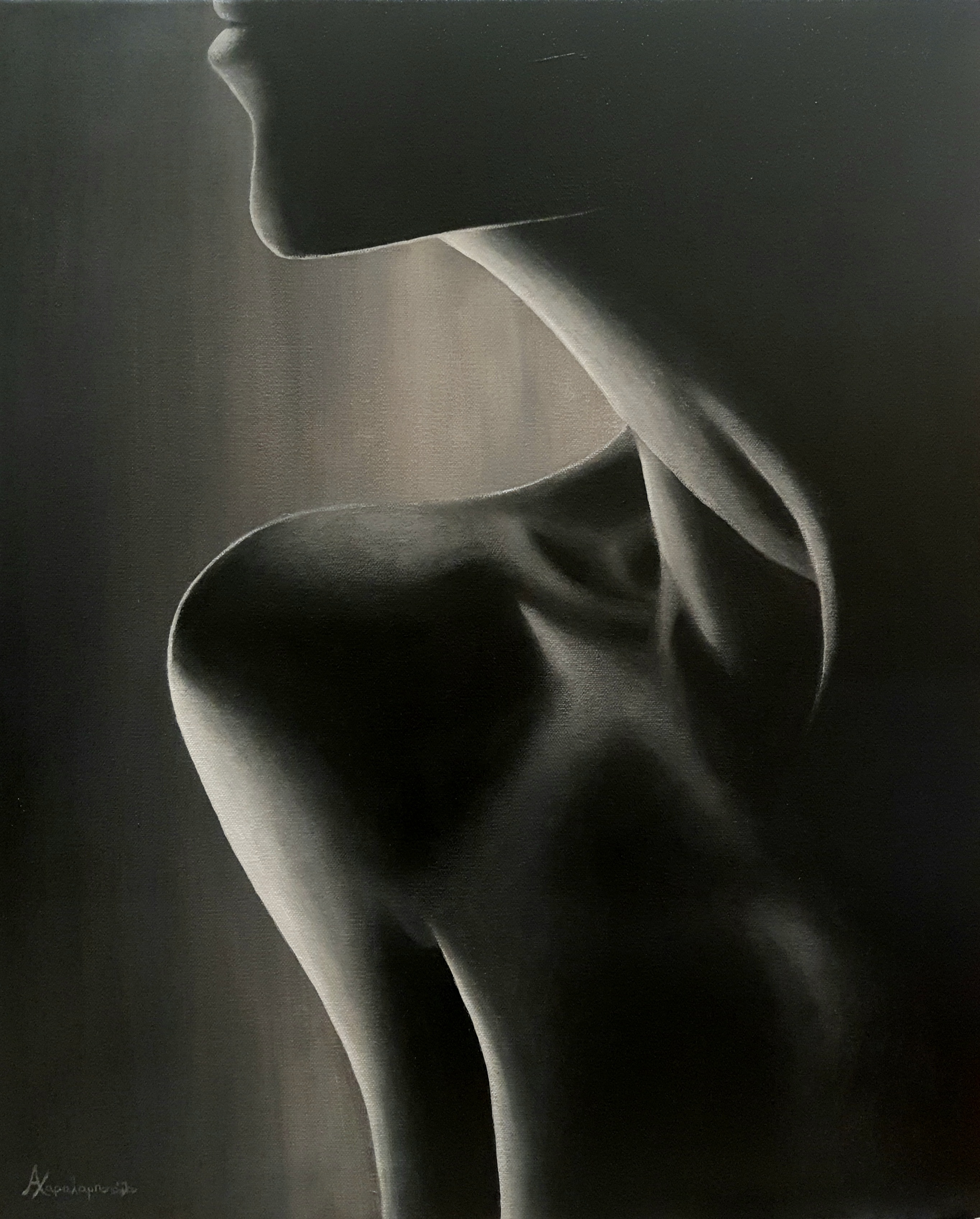
A study in light, form, and absence, Echo captures a fleeting moment suspended between presence and obscurity. The delicate interplay of chiaroscuro sculpts the figure, emphasizing the quiet tension in the curve of the shoulder and the subtle tilt of the head.
By withholding full identity, the piece invites the viewer to project their own emotions onto the form—turning the painting into a reflection, an echo of presence that lingers yet remains unattainable.
Expressive Realism
«Quest to freedom»
Oil on canvas paper, 40*50
2023
Painting Description
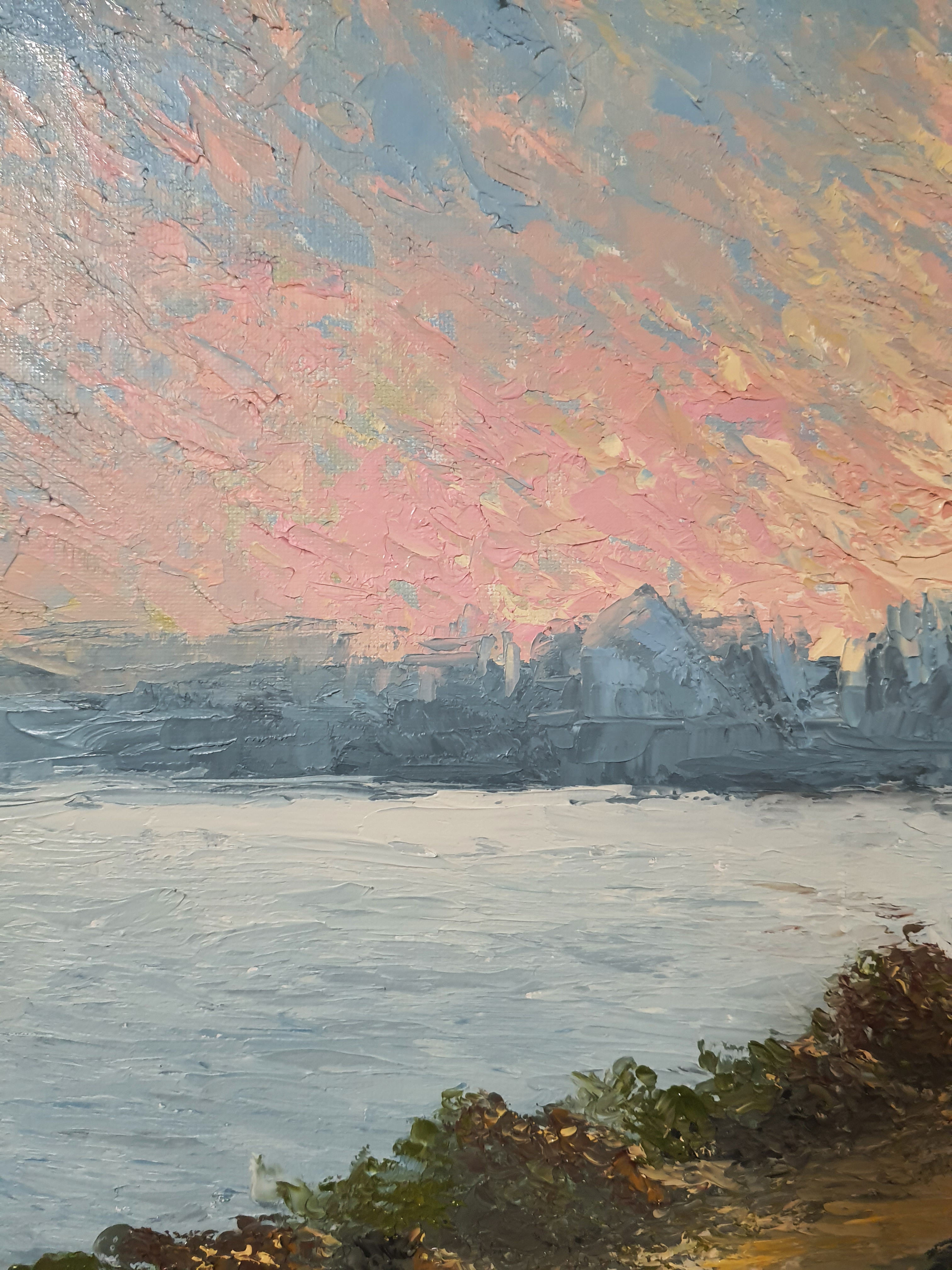
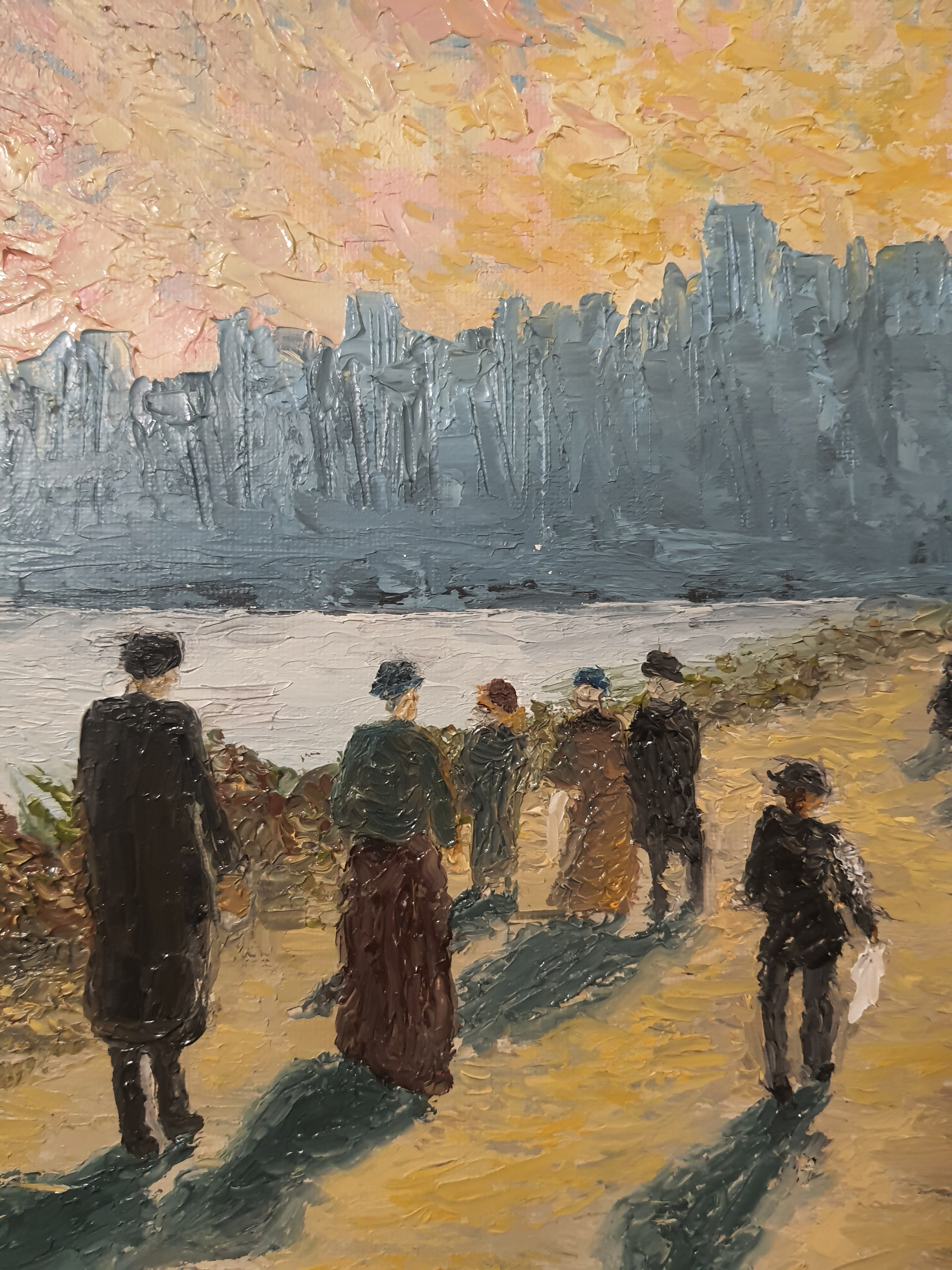
A poignant reflection on displacement and resilience, Quest to Freedom captures a group journeying toward an uncertain future. Painted entirely with a palette knife in an impressionistic style, the textured strokes evoke both the hardship and determination of those seeking refuge.
As the figures move toward the city at dusk, the interplay of light and shadow symbolizes the fragile balance between hope and struggle. The painting serves as a reminder of the shared human experience of war, migration, and the pursuit of freedom, urging reflection on compassion and unity.
«Nostalgia»
Acrylic on canvas, 50*50
2023
Painting Description
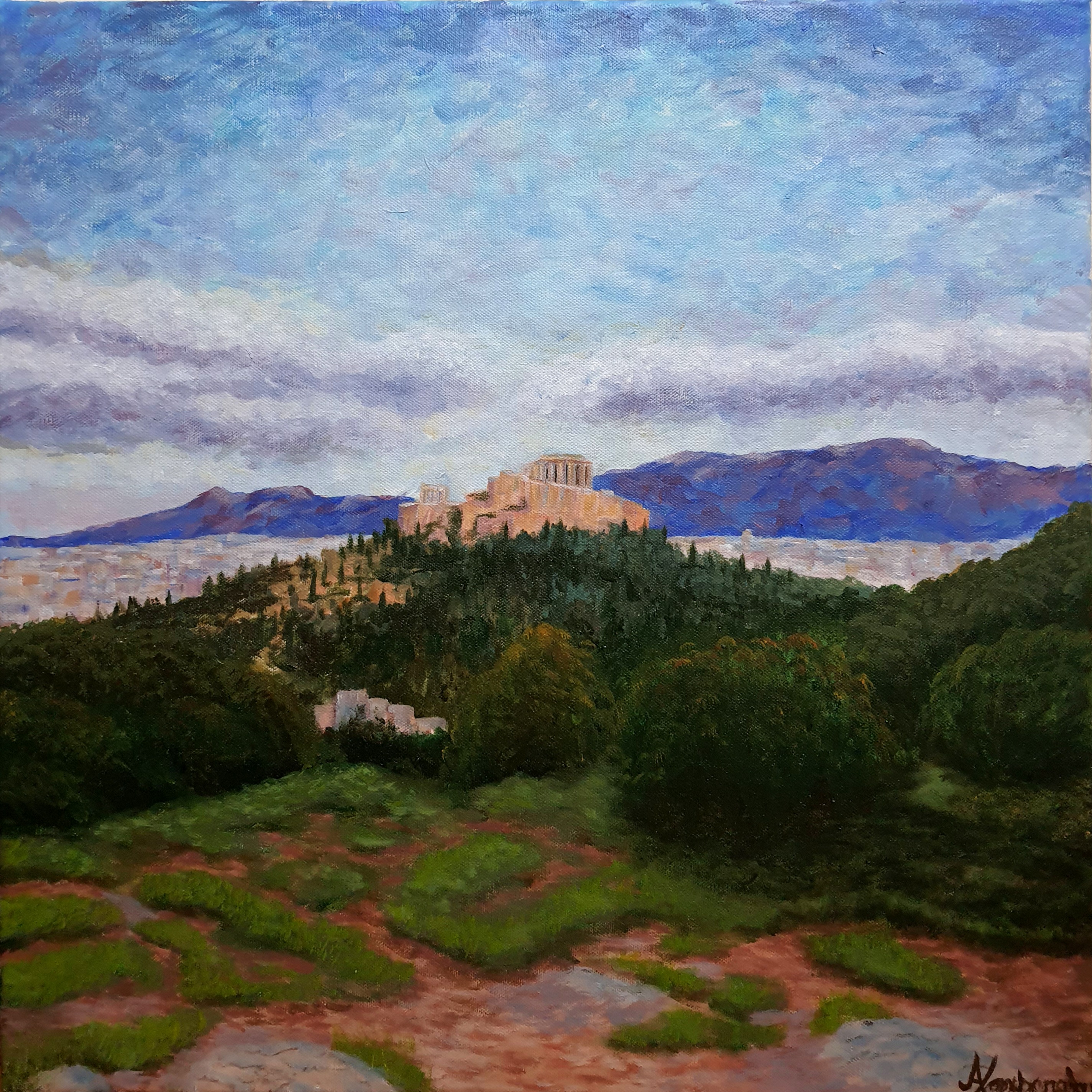
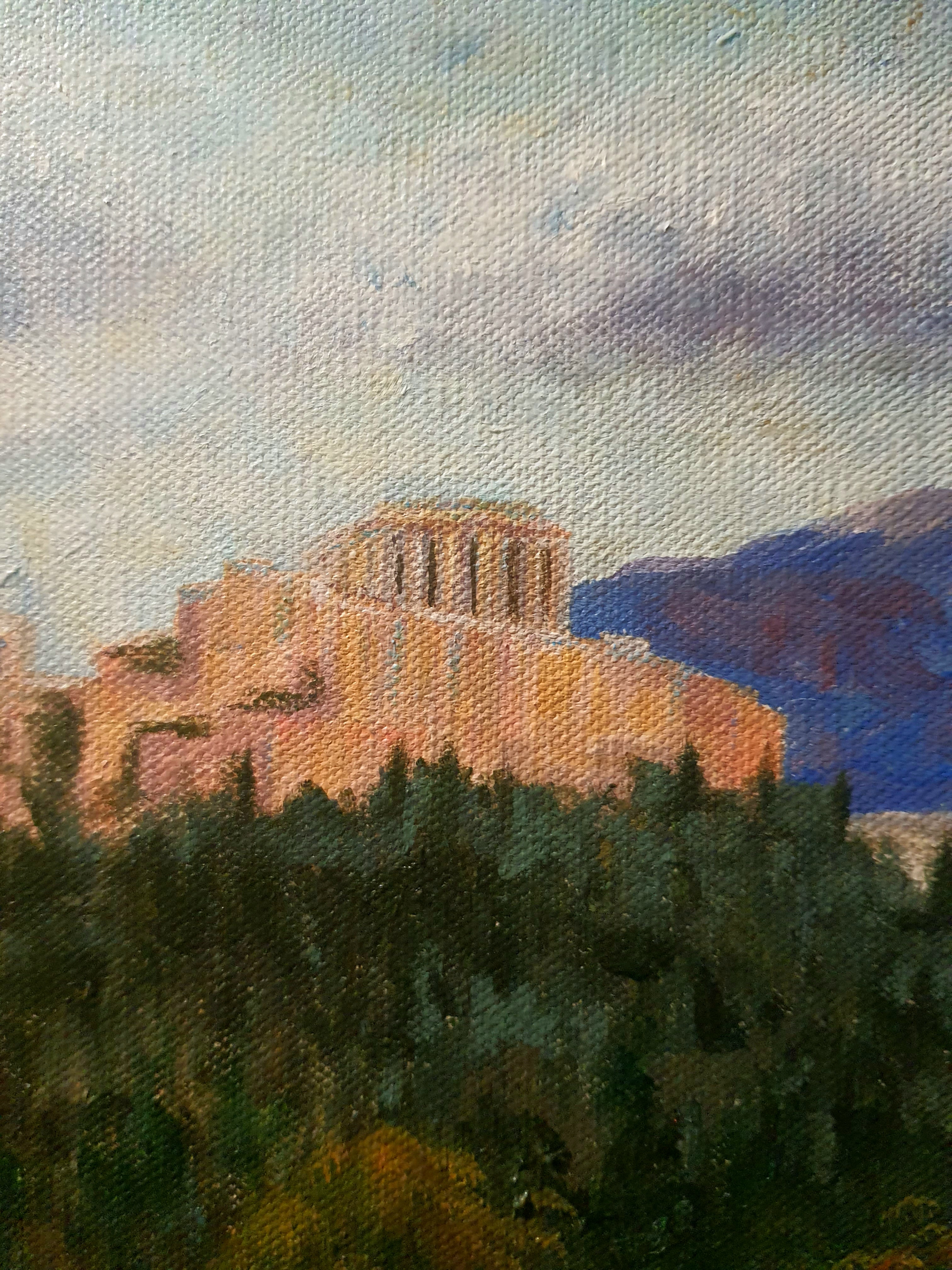
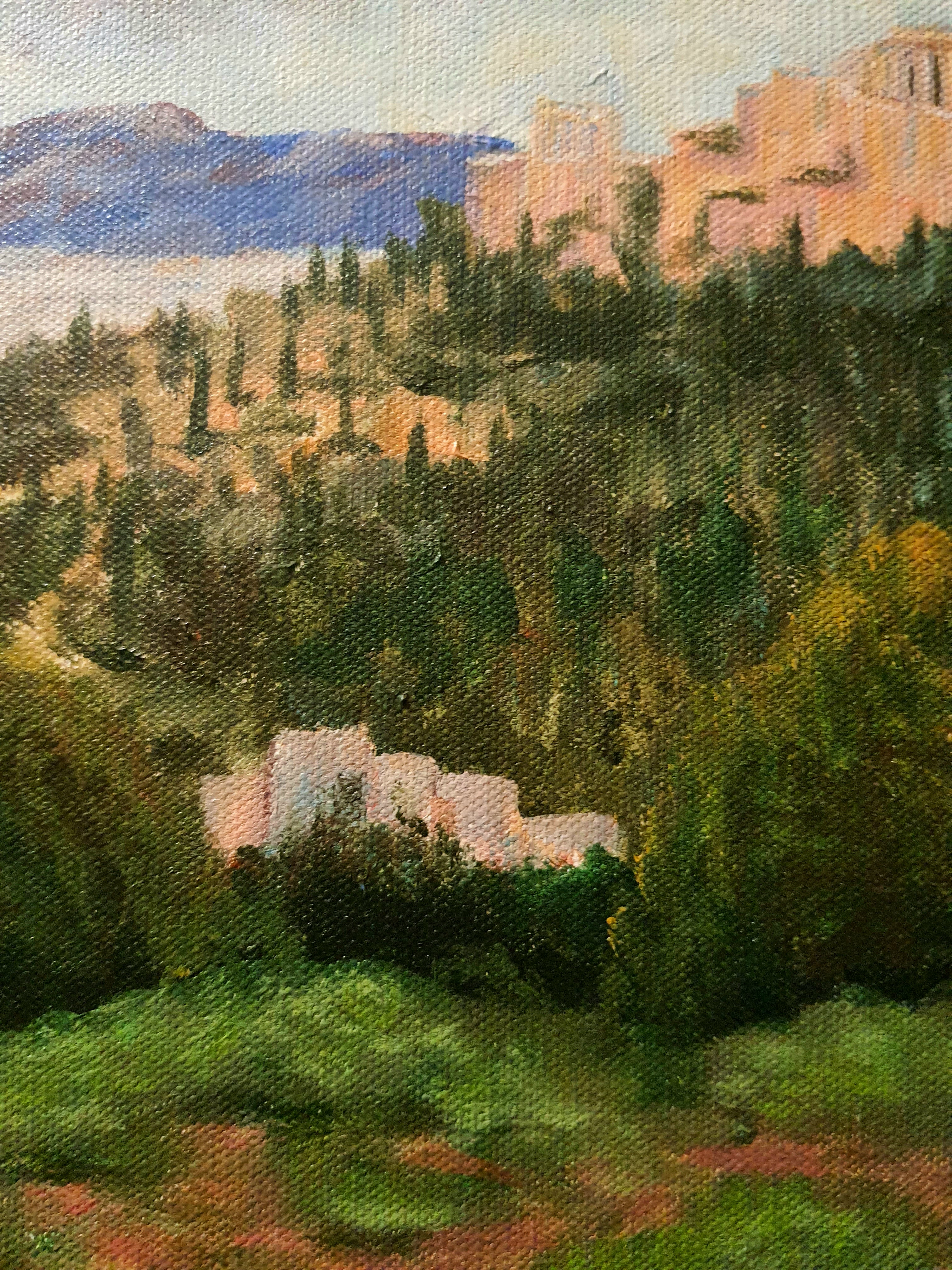
An impressionistic tribute to Athens and its timeless spirit, Nostalgia captures the Acropolis bathed in soft light, evoking a deep connection to the city’s history and atmosphere. Loose brushstrokes and a rich color palette bring movement to the landscape, mirroring the passing of time and the enduring presence of the past. This painting is a reflection on memory, longing, and the eternal beauty of a place that feels both distant and ever-present.
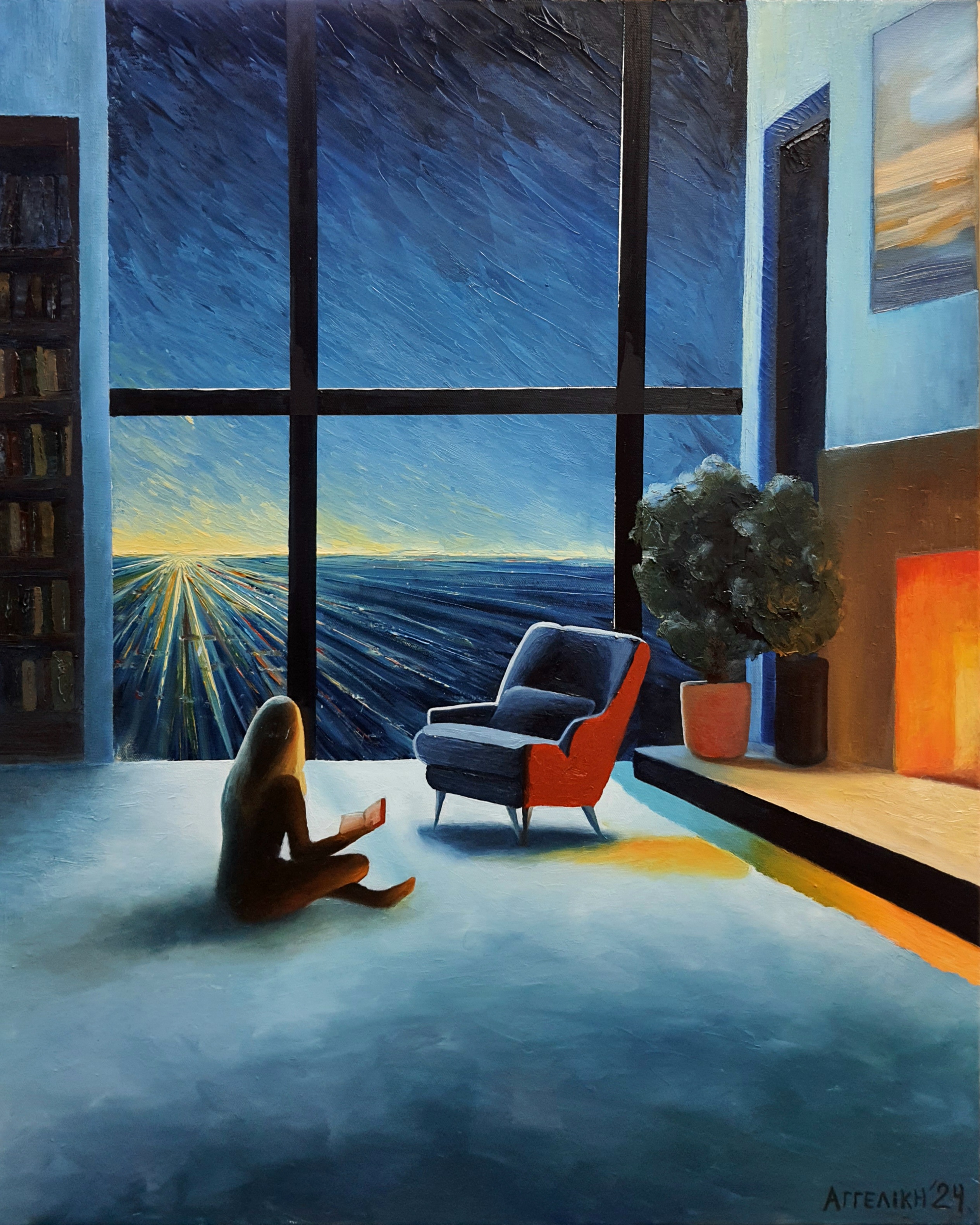
«The Solitude of Thought»
Oil on canvas, 60*80
2024
Painting Description
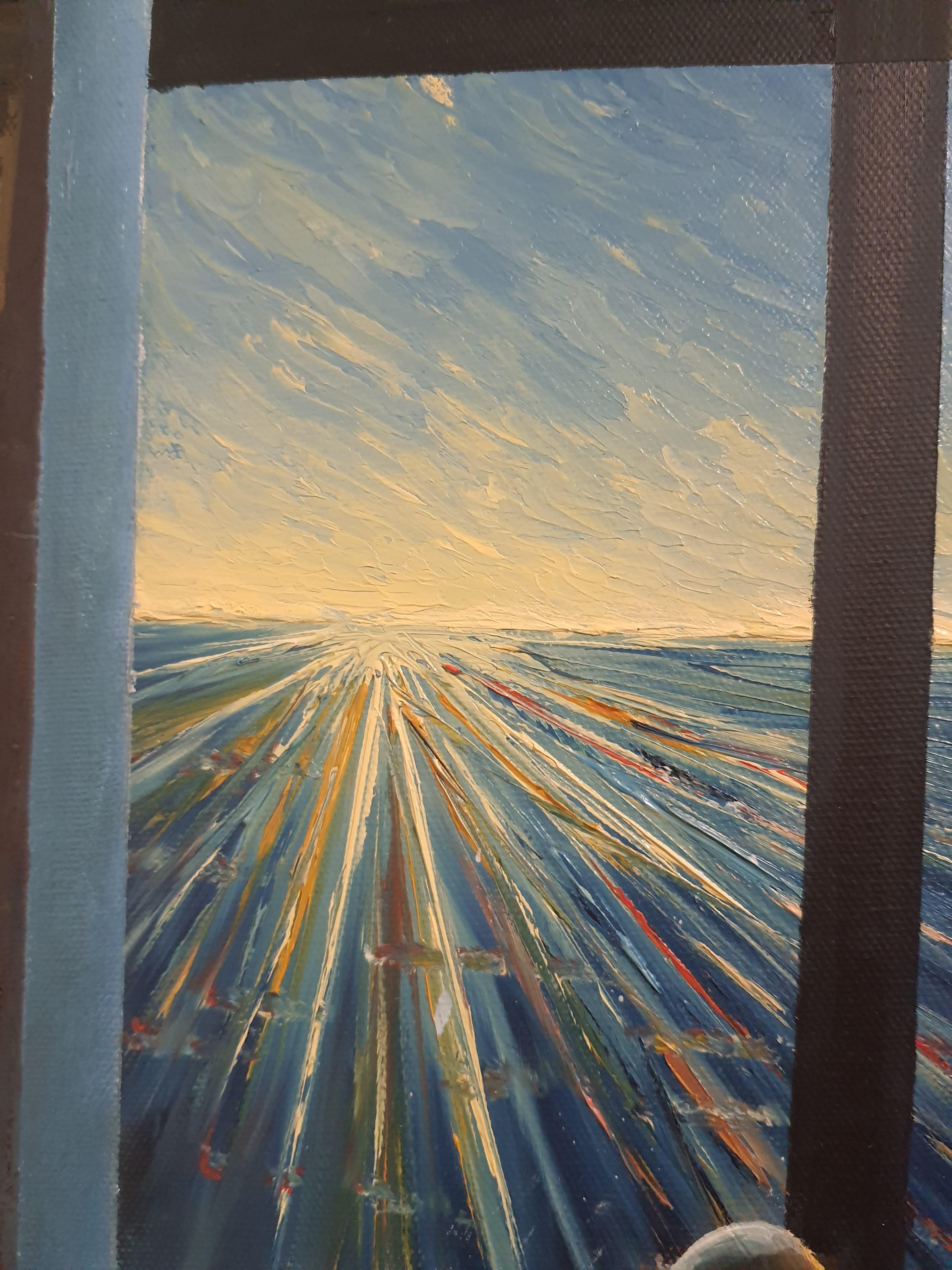
A quiet meditation on introspection and discovery, The Solitude of Thought guides the viewer through a visual journey from interior warmth to the vast unknown. The contrast between the glow of the fireplace and the cool night sky creates a harmonious balance between comfort and curiosity.
The seated figure, immersed in a book, symbolizes self-reflection and intellectual escape, while the empty armchair invites the viewer into the scene. The bookshelf and horizon line reinforce the theme of knowledge and infinite possibility, transforming solitude into a moment of quiet expansion.
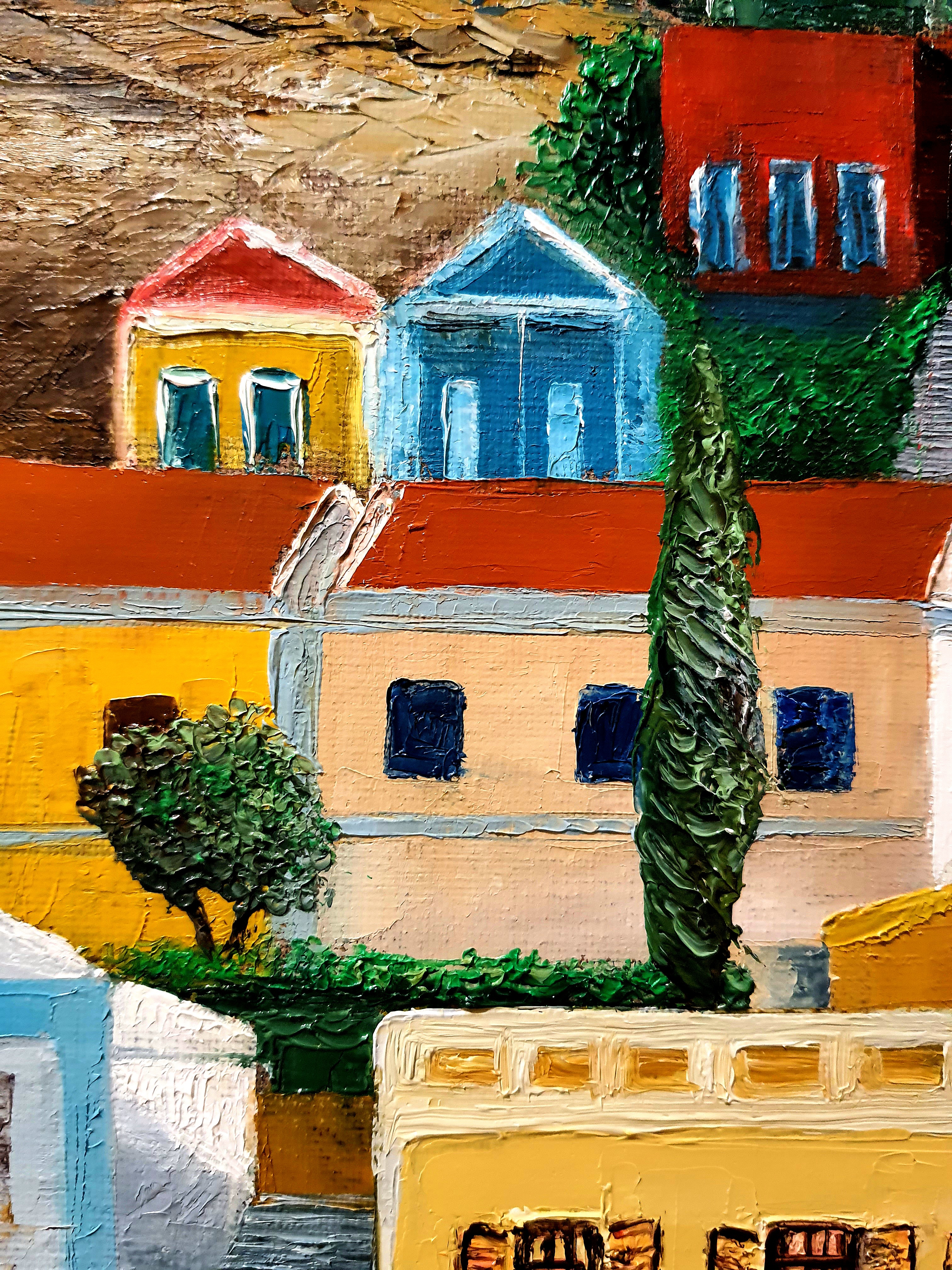
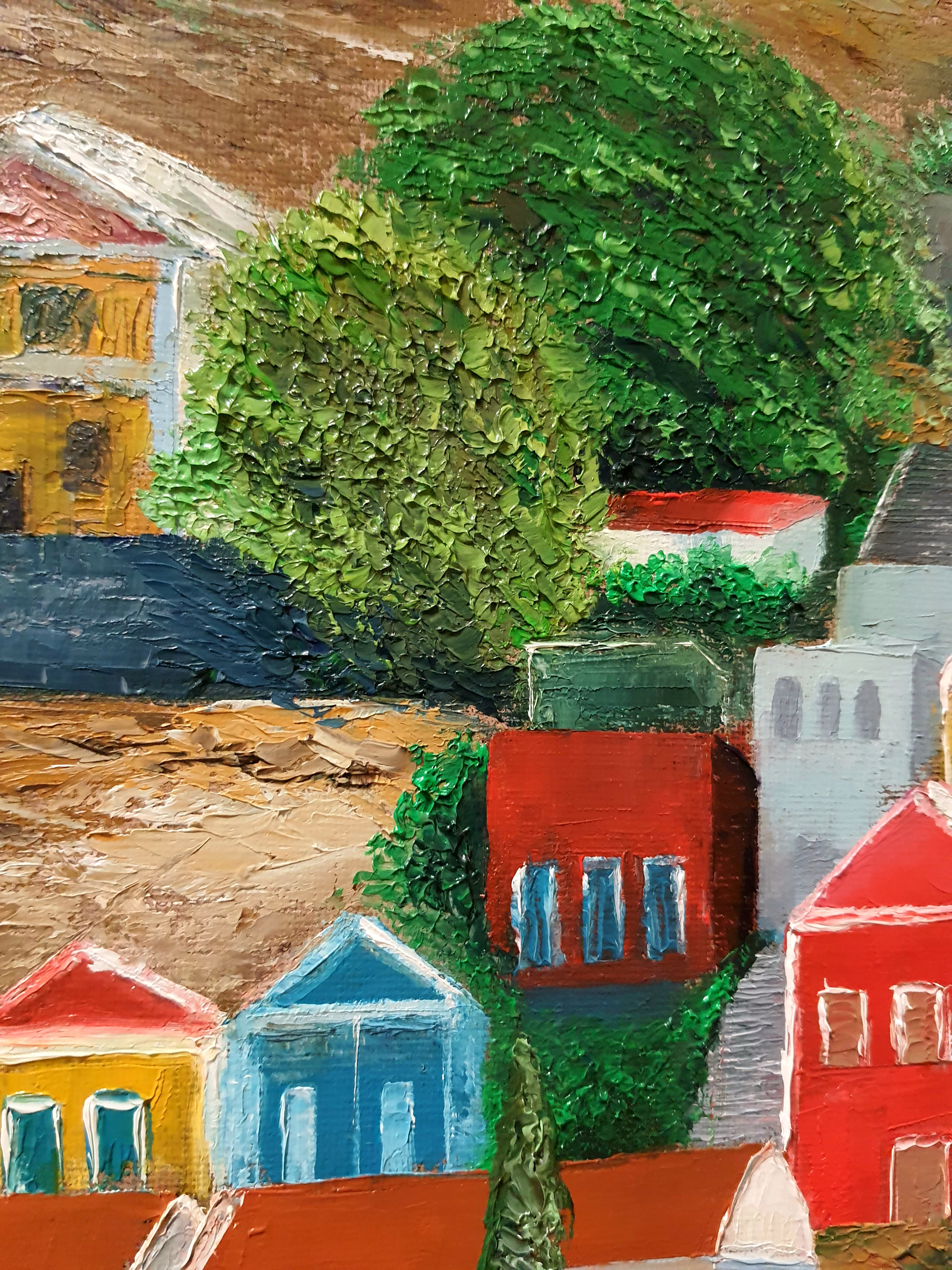
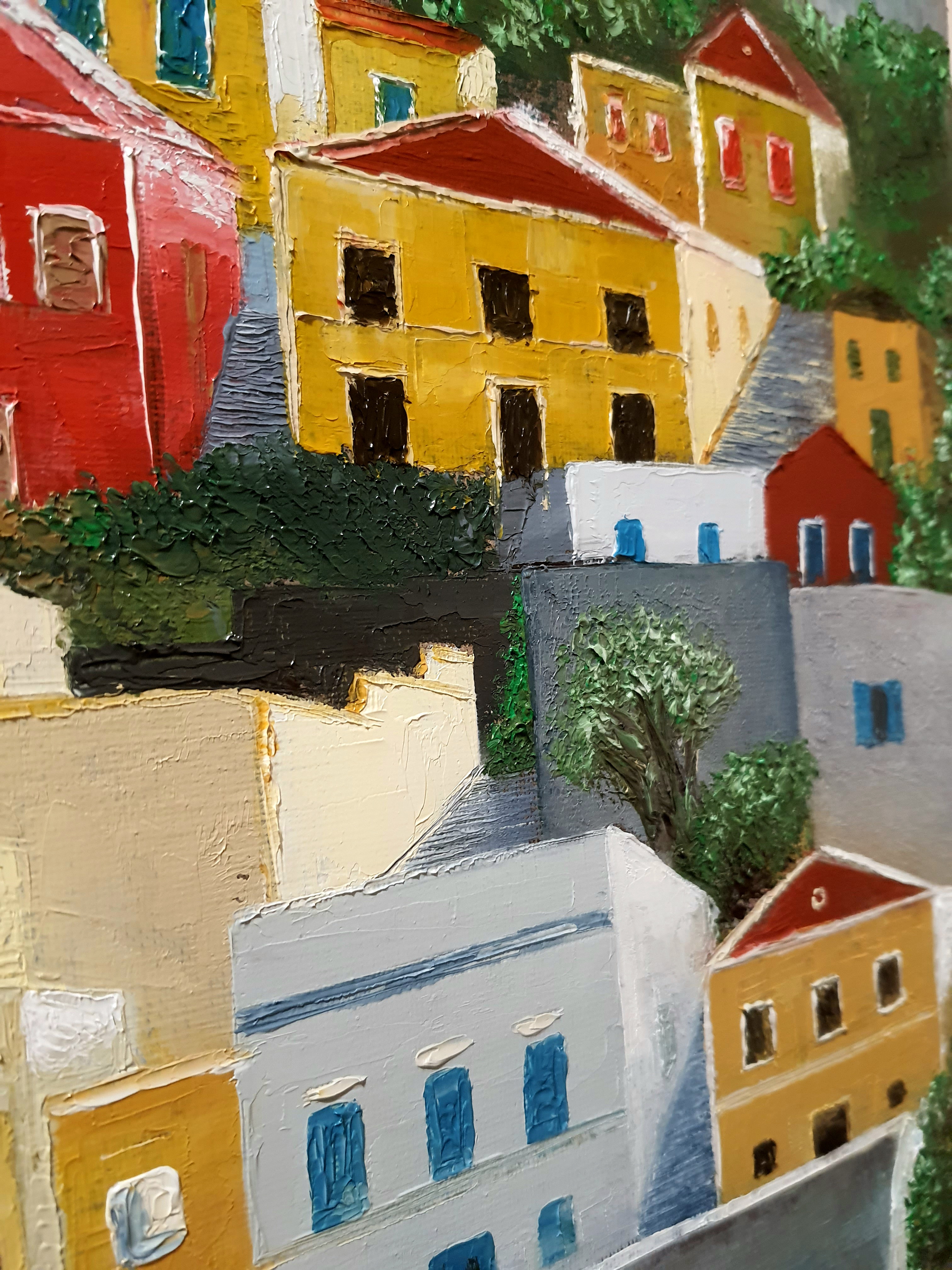
«Symi island, Greece»
Oil on canvas, 40*50
2023
Painting Description
A vibrant tribute to the architecture and atmosphere of Symi Island, this painting captures the layered facades, bold colors, and textured landscapes of the Aegean town. Thick, expressive applicarion with pallete knife add depth and movement, while the interplay of light and shadow evokes the warmth of the Mediterranean sun. The composition balances structure and spontaneity, reflecting the island’s unique charm and timeless appeal.
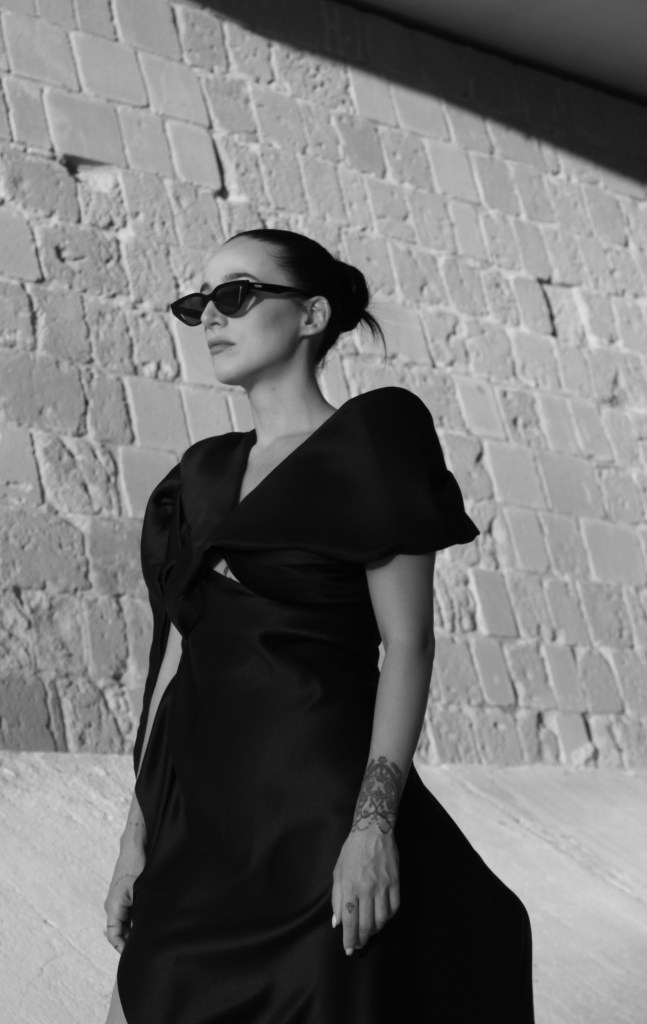
Concept, research, garment design & construction, photography and art direction
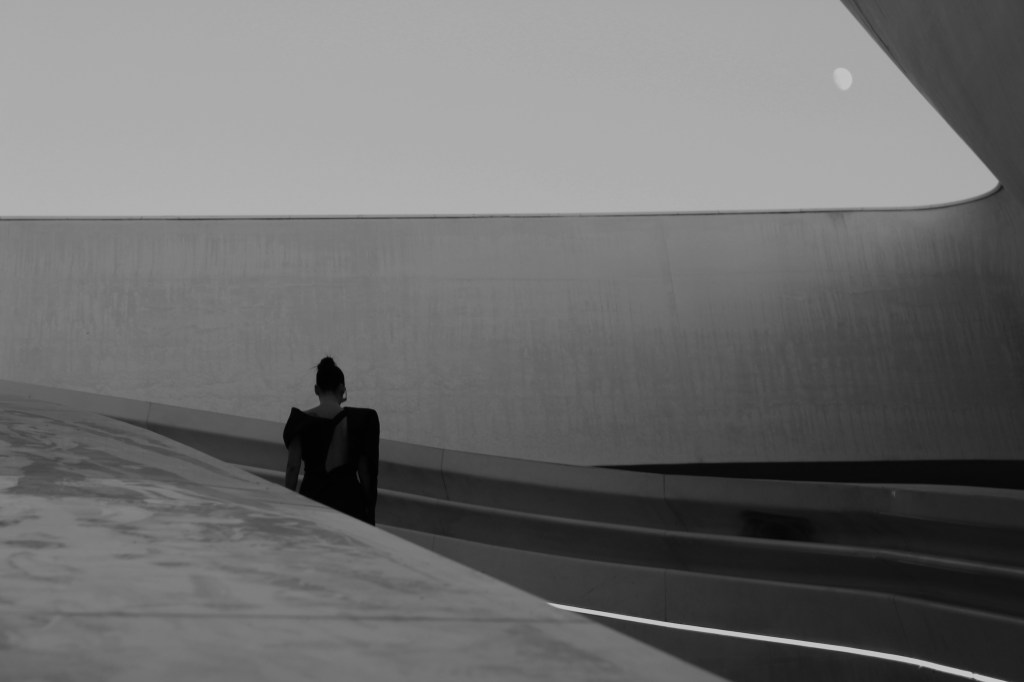
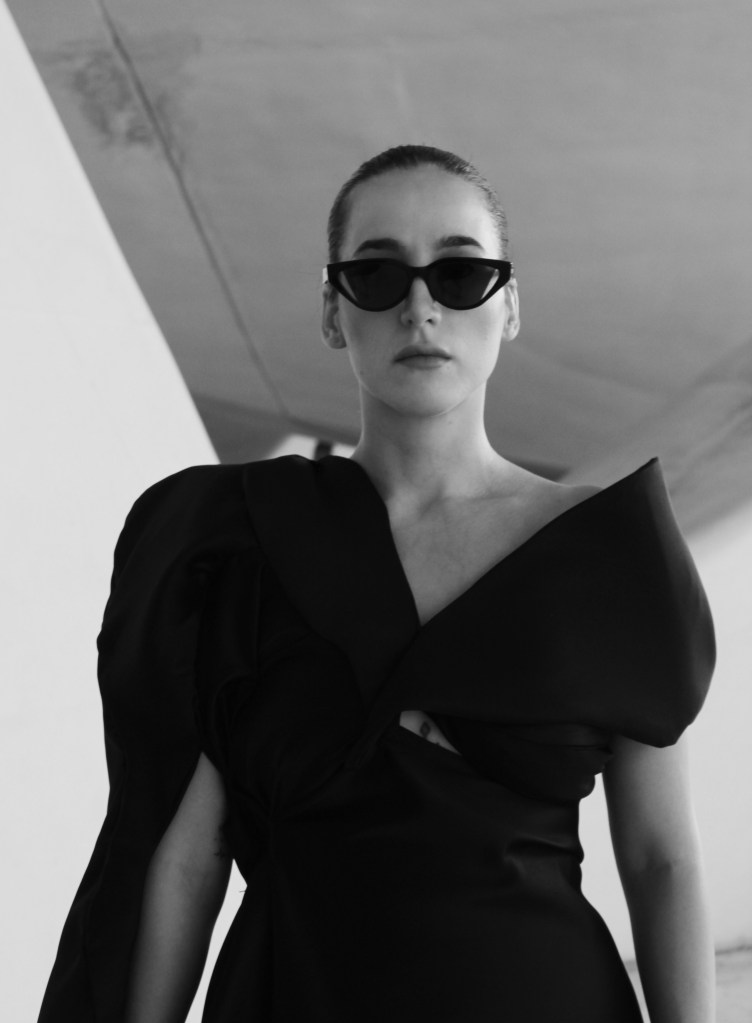
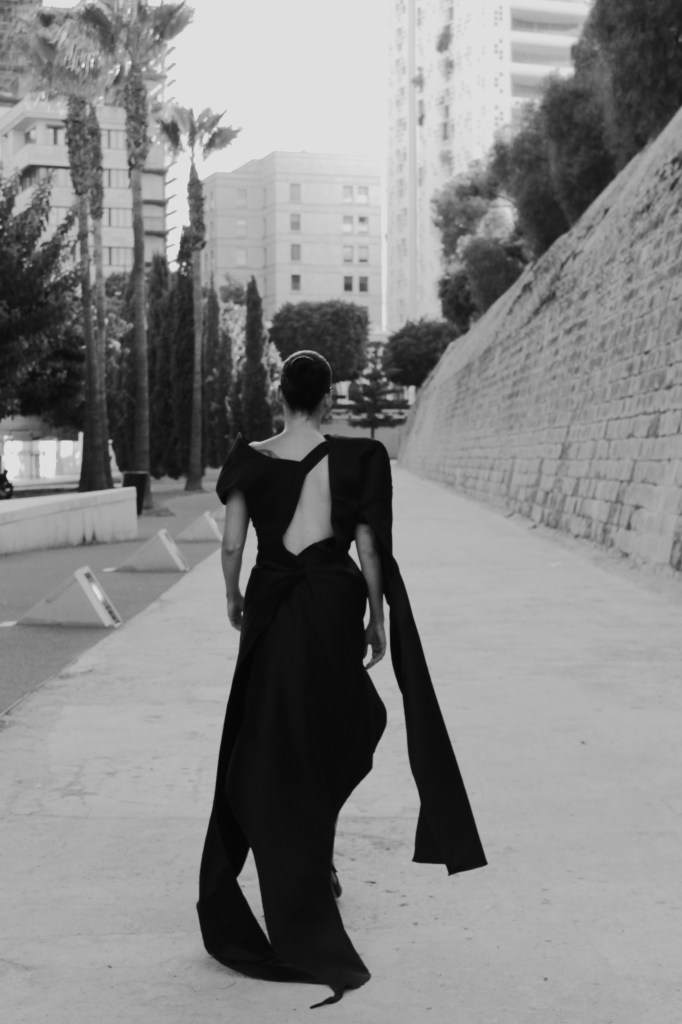
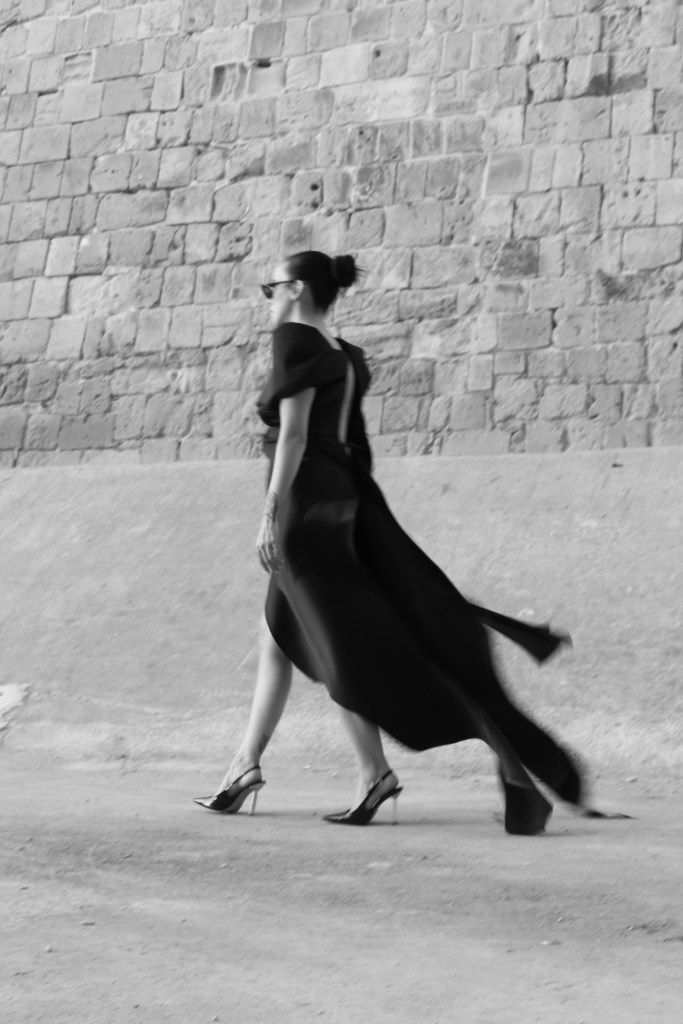
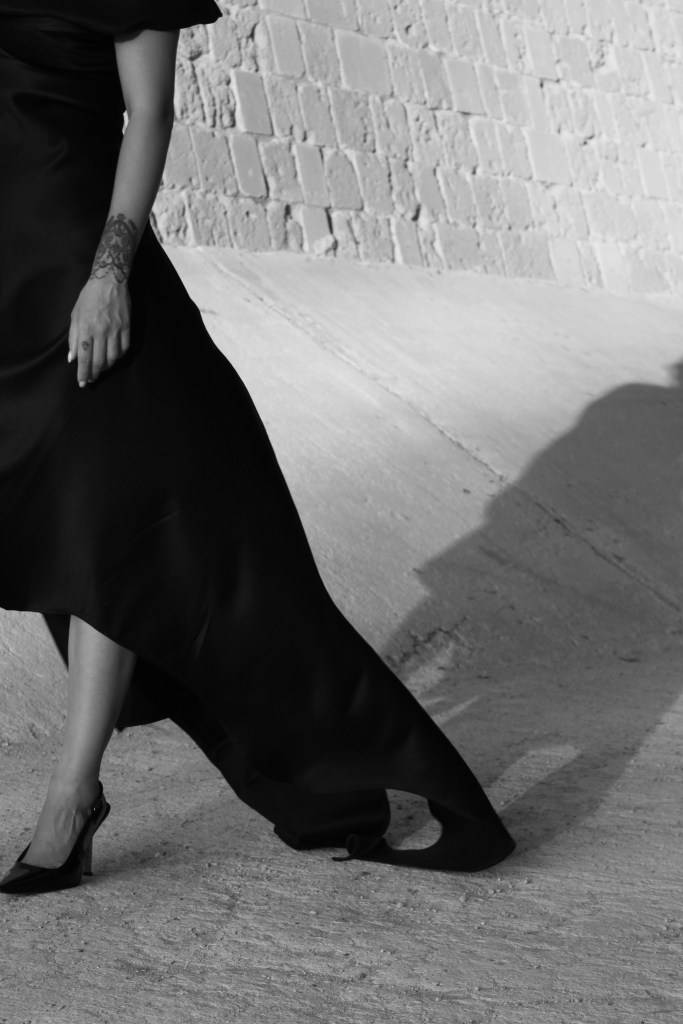
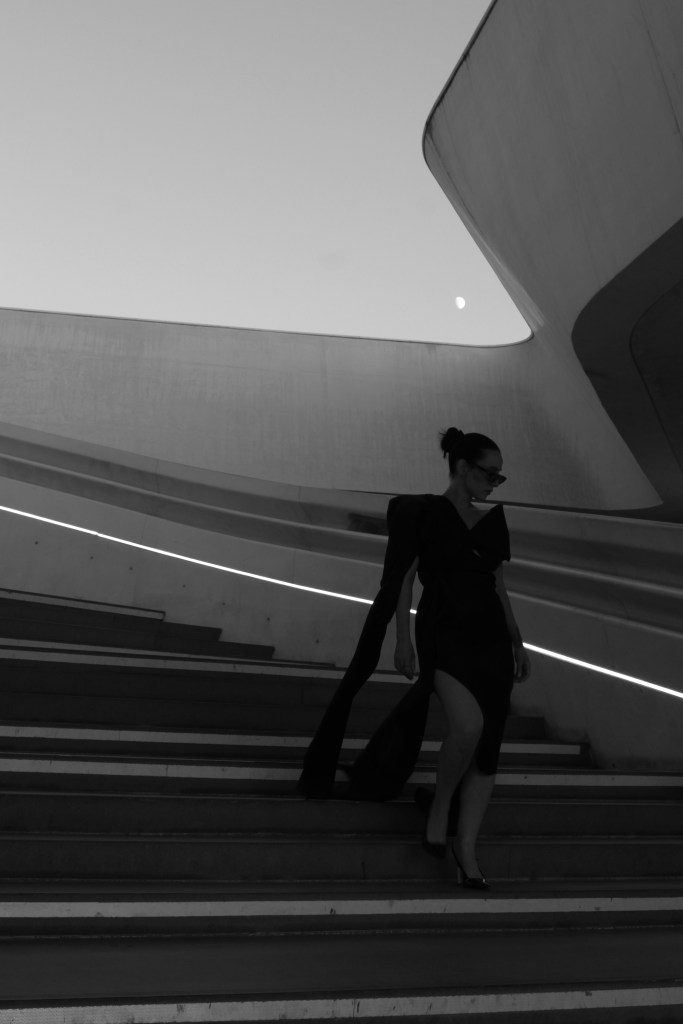
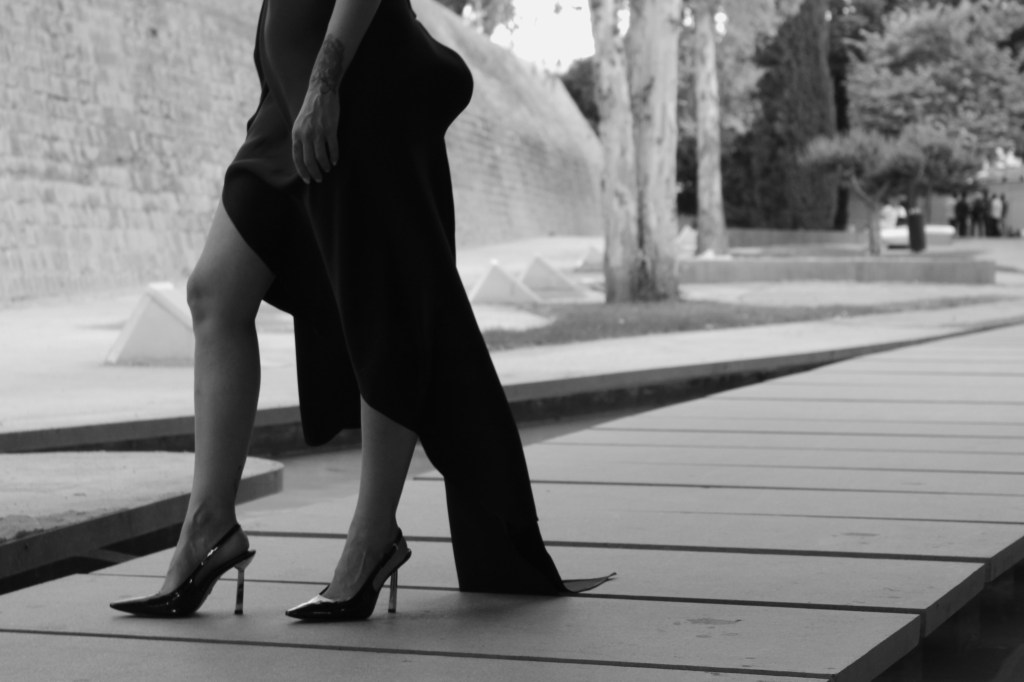
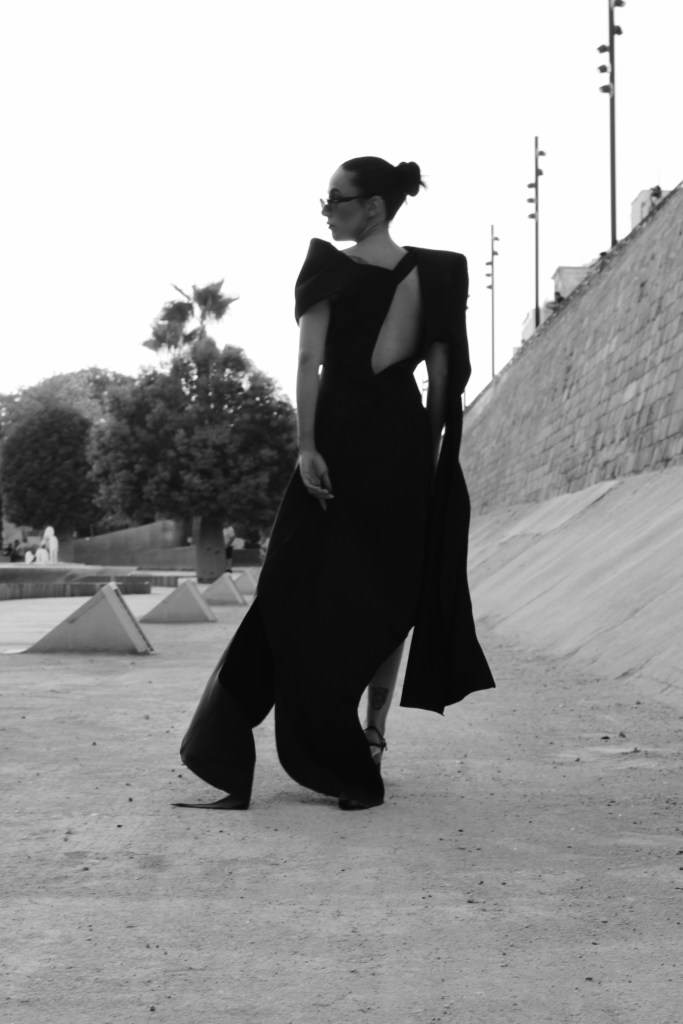
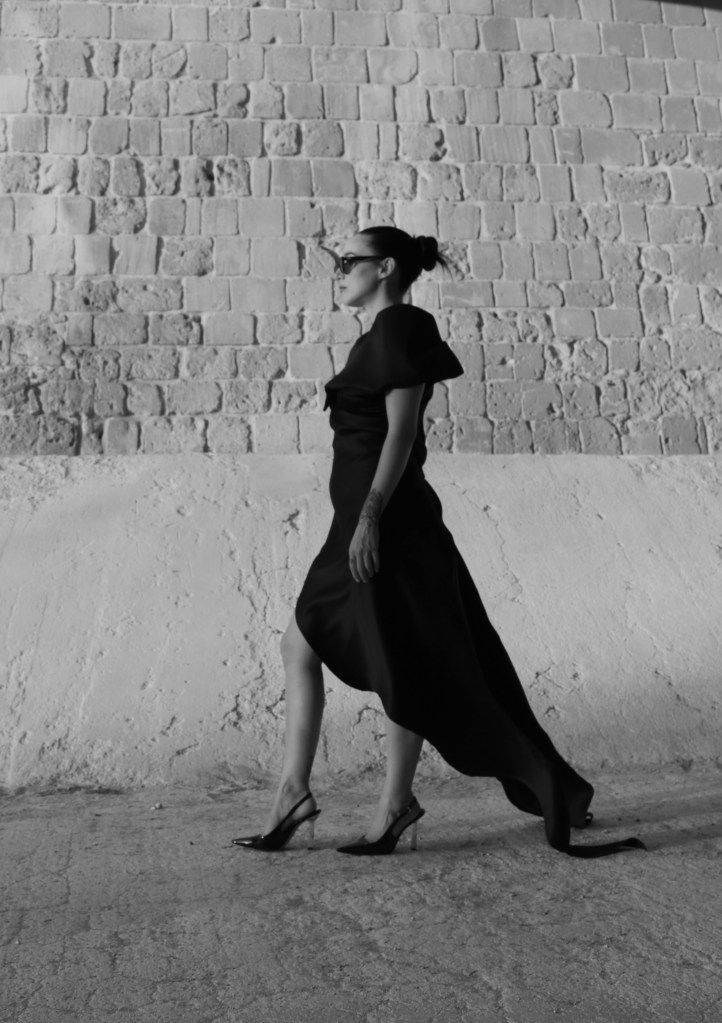
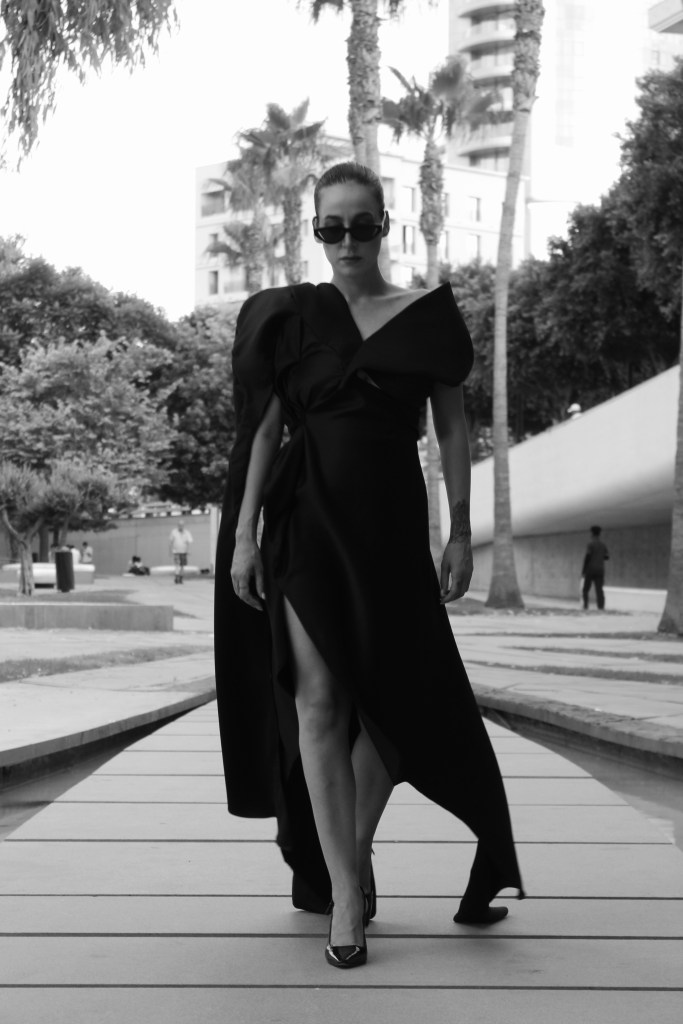
Current began with the study of waves not as images, but as structures of temporary form. Their repetition, accumulation, changing contours and constant movement became the starting point for an investigation into how something can appear momentarily defined while remaining continuously in transformation. The project moved through photography, drawing, painting, material experimentation and garment construction before returning to photography through the moving body. Rather than representing water literally, the final garment translates the behaviour of the wave into silhouette, volume, rhythm and delay. Structured forms rise from the body while extended fabric follows its movement, preventing the silhouette from becoming completely fixed. The body does not simply wear the work. It activates it. Current therefore exists somewhere between garment, image and movement — becoming fully visible only through change.
Dress Design Details
The garment began with the study of waves as structures rather than images. The design process focused on their rhythm, repetition, accumulation, changing contours and the tension between a form that appears momentarily defined and one that is continuously transforming.
Initial research developed through photographs of waves, drawing and painting studies, and experiments in translating their contours into three-dimensional forms. References to Pierre Cardin’s sculptural approach to silhouette also informed the exploration of how exaggerated volume could move away from the natural outline of the body.
Different fabrics were tested according to their weight, flexibility, movement and ability to retain form, as the garment required two apparently contradictory qualities: enough structure to create controlled sculptural volumes and enough fluidity to respond visibly to the movement of the wearer.
The final design is built around this opposition.
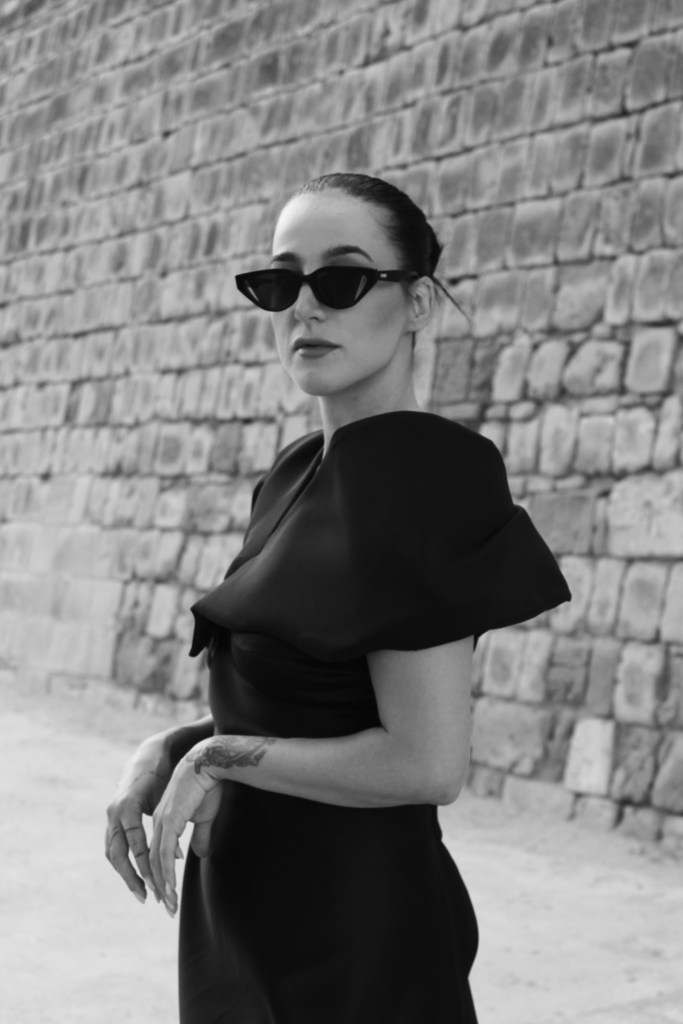
A relatively fitted central silhouette anchors the garment to the body, while asymmetric sculptural shoulder structures expand outward from it. Their folded and projected volumes reinterpret the rising and breaking forms of waves without reproducing them literally.
From this controlled upper structure, the garment progressively releases into movement through layered and extended fabric panels, an irregular asymmetric hem and long trailing forms. These elements do not move simultaneously with the body; they drag, lift, fold and follow it with a slight delay, allowing the silhouette to change continuously while the wearer walks.
A front slit interrupts the density of the black mass and introduces the moving leg into the composition, while the open back creates a second form through negative space. The exposed body therefore becomes part of the design rather than simply remaining underneath the garment.
The use of black further removes the design from a literal representation of water. Instead of relying on blue or aquatic imagery, the wave is communicated through silhouette, rhythm, volume and movement.
The finished garment exists between structure and fluidity: part sculpture, part moving surface. Its form is never completely fixed, becoming fully visible only through its interaction with the body and motion.
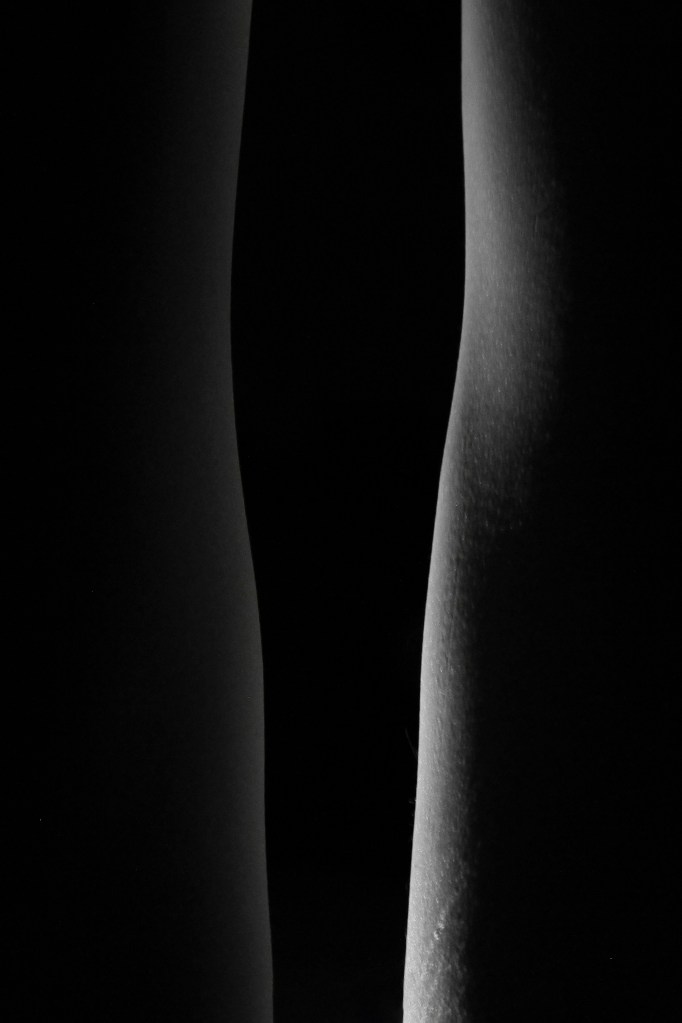
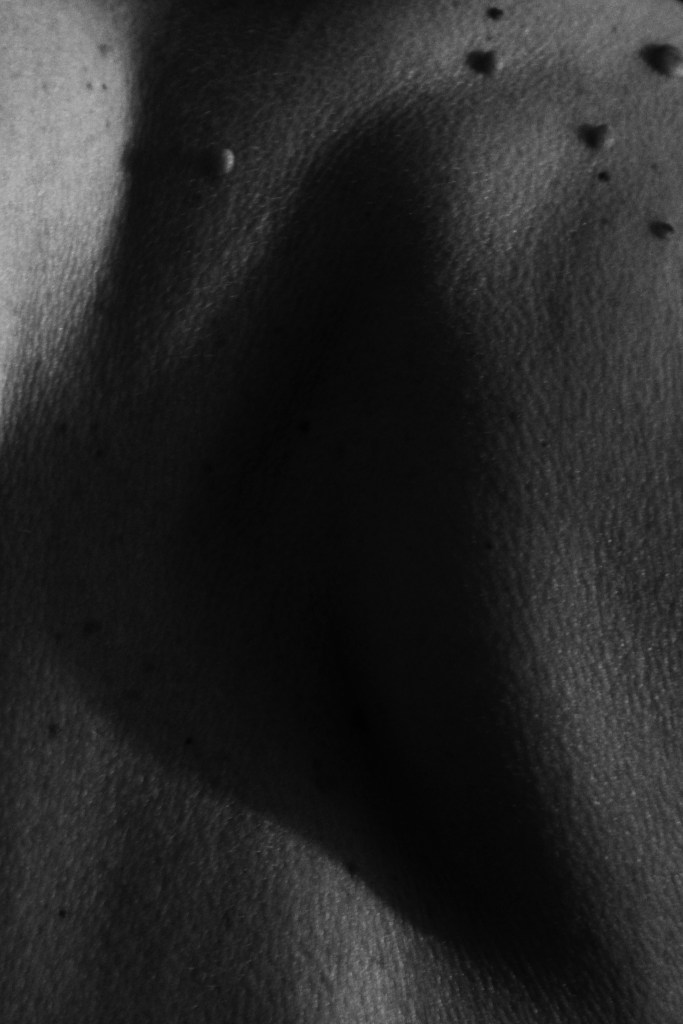
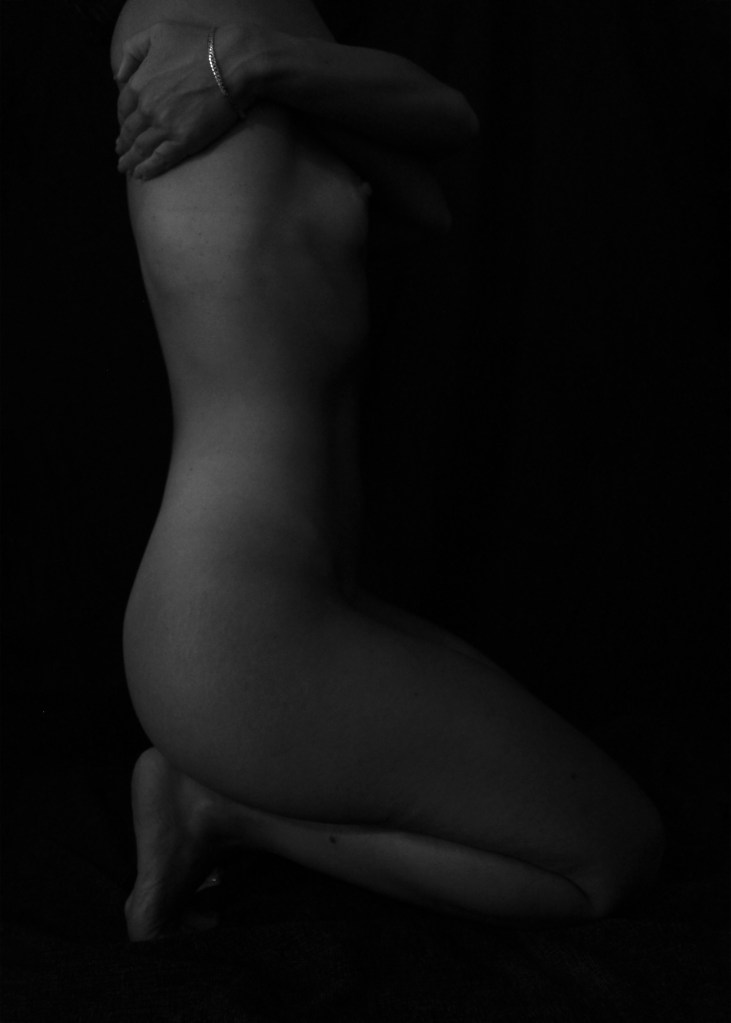
Series: «Fragmentation of the Unseen»
Annual Exhibition, Aigaia School of Art, 21-28 June 2025, Nicosia
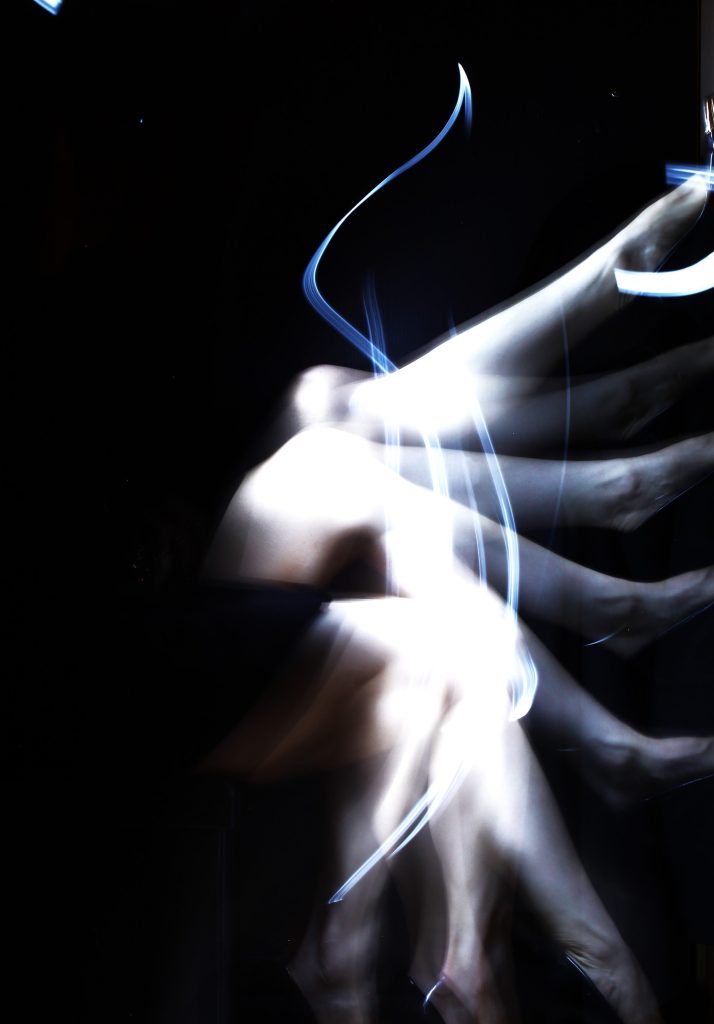
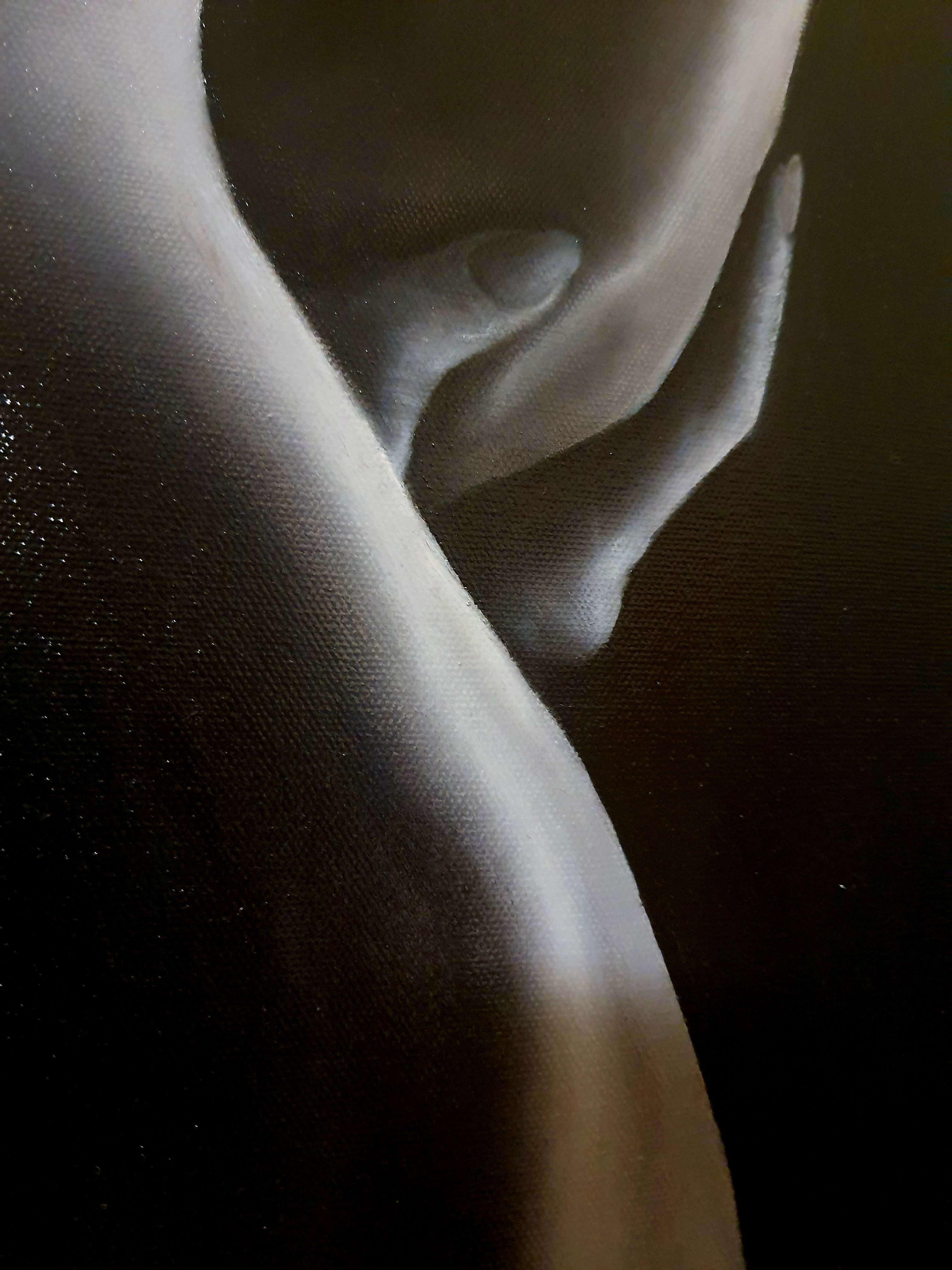
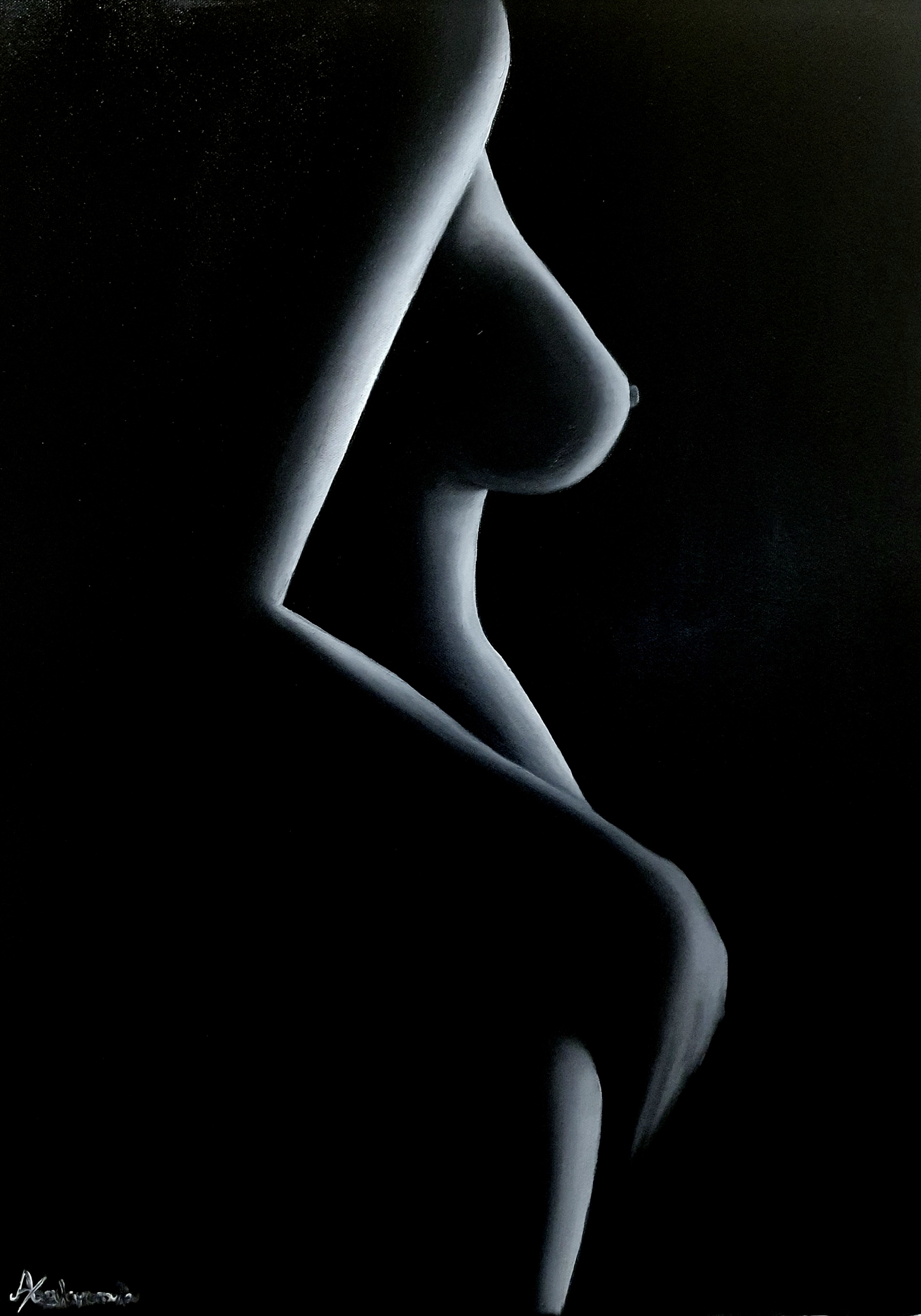
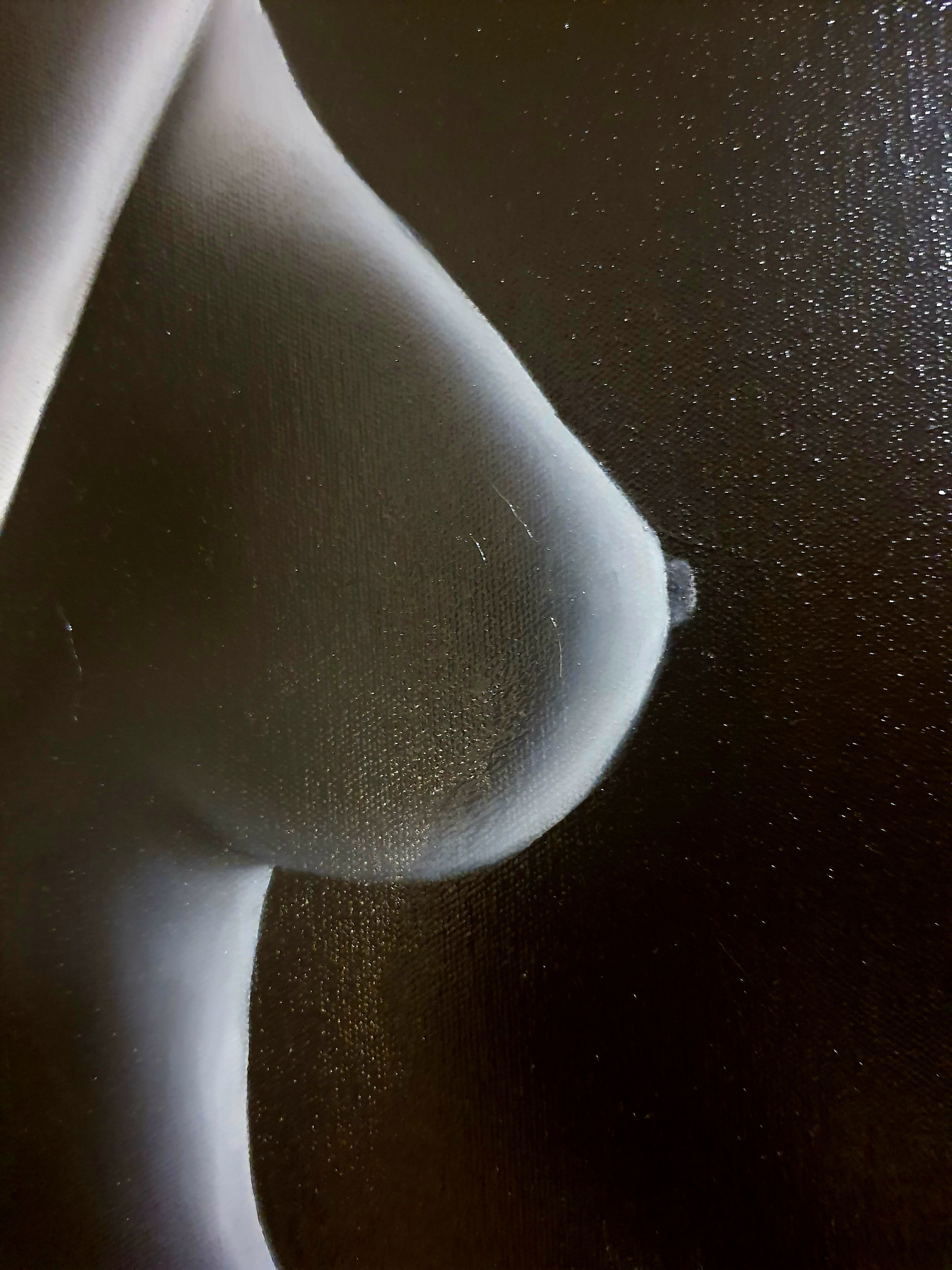
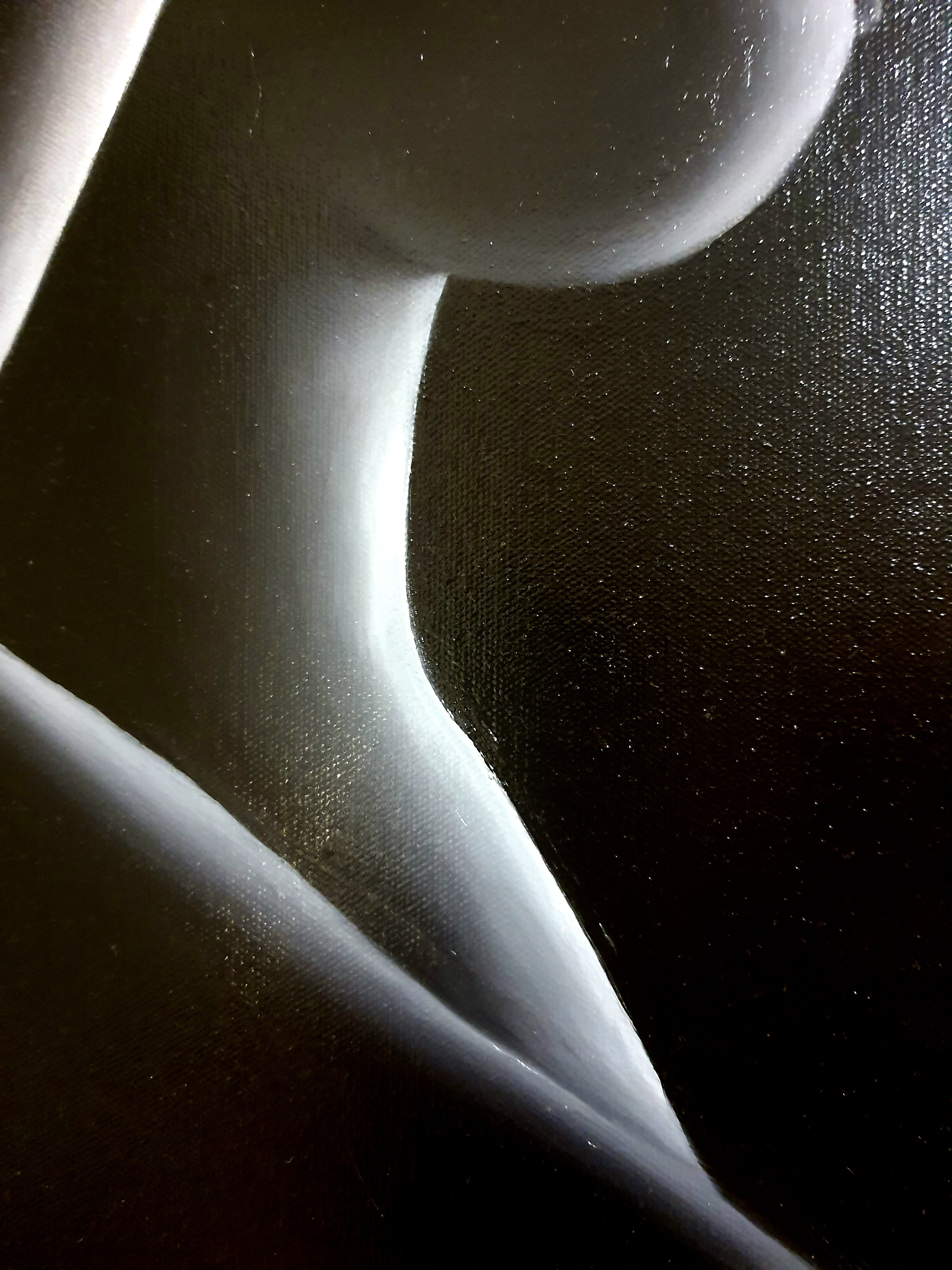
The body, as a metaphor for the fragmented perception of existence is deliberately incomplete. The wholeness of the nude is denied.
Each image offers only what is already known—the past and the present. The future, remains beyond the frame and the absence is not a void but a charged space. A field where freedom and anxiety coexist.
The images pause and they sit inside the tension of not knowing. Acknowledging the unease and perhaps, choosing how to live within the absurd.
Writing forms a parallel strand of my practice rather than an explanation of the visual work. Essays, poems, fragments and correspondence often develop beside images, sometimes preceding them and sometimes continuing questions that the visual form cannot contain. Across them recur questions of identity, memory, absurdity, freedom, attachment, impermanence and the value we construct within experience. Some texts remain independent works. Others gradually enter larger artistic universes. The correspondence with Maurice occupies one such space: somewhere between writing, character, mirror and archive.
Είναι γενικώς παραδεκτό πως ο ορθολογισμός και, συνεπώς, η εξορθολογισμένη λήψη αποφάσεων βασίζονται σε δεδομένα που το υποκείμενο αξιολογεί, σταθμίζει, προσδίδει την κατάλληλη βαρύτητα και εν τέλει αποφασίζει.Ωστόσο, παρά τις —υπεράνθρωπες ενίοτε— προσπάθειές μας, καταλήγουμε συχνά ενώπιον ενός αδιαπέραστου τοίχου ελλείψεως πληροφοριών, ορισμένες φορές κρίσιμων για την εκάστοτε επιλογή, πέραν του οποίου η ανθρώπινη και…
Dear Maurice, Τι να σου πω; Να σου πω ότι είσαι όλα τα κύματα; Όλα. Όπως πλησιάζουν το ένα το άλλο. Το καθένα με τη δική του ροπή, τη δική του ένταση, τη δική του πορεία. Και θα περίμενε κανείς πως όταν συναντηθούν θα συγκρουστούν. Μα δεν συγκρούονται. Ενώνονται. Και για μια στιγμή δεν υπάρχει…
«Και τώρα τι θα γένουμε χωρίς βαρβάρους;» λες, Maurice.Λες και κοιτάς.Κοιτάς, αλλά το βλέμμα σου δεν βλέπει.Χάνεται.Χάνεται κάπου μέσα σε αυτή την Άβυσσο που κάποτε ήταν σπίτι σου, μέσα σε ένα σκοτάδι τόσο οικείο και τόσο ελκυστικό.Πίστεψες κάποτε πως έστησες θεμέλια σε μια Άβυσσο που δεν έχει τέλος. Κι εσύ, παρ’ όλα αυτά, βρήκες έδαφος…